Optical frequency comb generation techniques: An overview
Adeel Shoukat
Abid Munir*
Shahab Ahmad Niazi
Zulfiqar Ahmad
Article Info
Received 30 Nov. 2025
Received in revised form 14 Jan. 2026
Accepted 28 Jan. 2026
Available on-line 08 May 2026
Keywords: optical communication; sub-carrier generation; optical frequency comb; super channels; optical modulation.
Abstract
Multi-carrier signal generation techniques are important in various photonic application domains. Multi-carrier sources having stable frequency responses, narrow line width and adequate spectral flatness can be used instead of laser arrays. One of the major applications of multi-carrier sources relates to high-speed optical communication networks. Optical systems such as orthogonal frequency division multiplexed (OFDM) and dense wavelength division multiplexed (DWDM) systems transmit information using multiple carriers on a single channel to improve the spectral efficiency of the transmission system. Traditional systems use multiple laser sources to generate multi-carriers, one for each channel with minimal phase coherence. Optical frequency combs (OFCs) generate optical subcarrier/carriers from a single laser source with improved phase and space coherence using different electro-optic schemes. Contrary to standard lasers, OFCs-based optical carriers provide reduced cost, flexibility, and improved spectral efficiency. In recent years, numerous publications have reported a variety of techniques to implement OFC and have succeeded in generating a wide range of carriers. For a comprehensive understanding of OFCs, it is essential to summarise and compare the techniques from a practical perspective, emphasising their real-world applications, advantages, and limitations. This review examines the characteristics of optical multi-carrier generators, providing a detailed comparison of different techniques. Furthermore, the transmission properties of these methods are analysed with focus on key practical factors, including flexibility, cost- efficiency, and power consumption. Lastly, potential challenges and future research directions relevant to real-world implementations are highlighted in this review.
1. Introduction
Optical frequency combs (OFCs) are optical signals having discrete lines in their spectrum with predictable and regular spacing. This knowledge area emerged by the developments of mode-locked lasers (MLLs) which achieved ultrashort optical pulses with phase synchronisation amongst lasing modes. The optical signal from MLLs demonstrated discrete lines with recognisable magnitude in frequency domain. Beside MLLs, continuous wave (CW) lasers can also be used to generate optical combs by using various electro-optic (EO) arrangements [1]. Due to peculiar characteristics, OFCs have potential applications in diverse scientific disciplines such as high-speed optical communication, optical spectroscopy, meteorology, and optical clocks. Due to ultrashort optical pulses with precise knowledge of spectral lines, OFCs are used to measure different atmospheric parameters, hence contributing to meteorological sciences. Study of material properties because of interaction of light with the material leads to optical spectroscopy which is another application of OFCs. Optical clocks utilize the feature of frequency combs to develop high-precision duration measuring devices [1]. While observing frequency domain, combs are considered as multiple copies of the seed laser, hence can be used as multiple carriers in optical communication systems to increase the overall performance of optical networks. In addition to the traditional OFC generation methods like MLL, EO modulators, gain-switching micro-resonators, deep learning [2] techniques are now being introduced in this field. Although, OFCs have applications in diverse domains, we will focus on OFC generation techniques and their applications in optical communications to make this article a reasonable yet focused review about OFC generation techniques (Fig. 1).
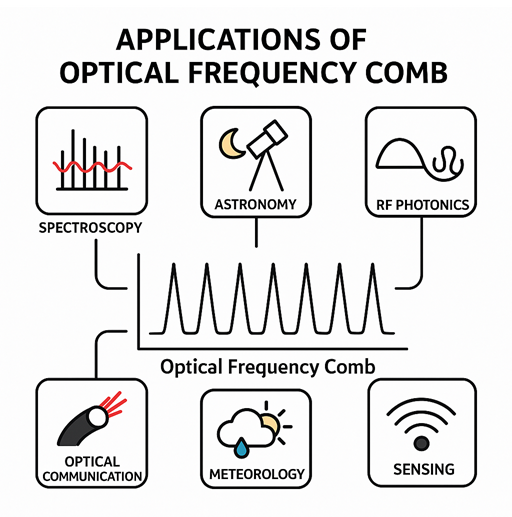
Fig. 1. Applications of optical frequency combs (OFCs).
Mathematically, an OFC can be represented using a general equation (1) in the frequency domain:

where the amplitude of n-th sub-carrier is an, N is the number of sub-carriers and Δ ω is the carrier spacing. In optical fibre communications, generation of optical frequency combs is also regarded as generation of multicarrier signals with advantages of phase and frequency coherence [3] Therefore, OFCs supersedes the traditional methods of multi-carrier generation which use multiple lasers and bear inherent disadvantages of phase misalignment, frequency drifts, and variations in carrier spacing. In recent research reports, there are different techniques to generate OFCs [4]. The choice of OFC scheme depends upon the nature of target application. The different comb features like amplitude stability, frequency, spectral range, occupied bandwidth, phase correlation, phase noise, and spectral flatness depend upon the OFC generation schemes [5].
1.1. Significance of OFCs
OFCs can produce equally spaced multiple frequency tones from a single laser. These tones are phase-coherent, symmetrically spaced, and frequency-locked. These features of OFCs make them preferred choice over an array of lasers for applications in a long-haul communication [6]. Here we mention some specific advantages of OFCs compared to array of laser sources.
1.1.1. Cost and power consumption
In optical fibre transmission systems, orthogonal frequency division multiplexed (OFDM), and wavelength division multiplexing (WDM) techniques use multiplexing of optical carriers to develop super channels and increase spectral efficiency. These super channels require laser arrays both in transmitter and receiver. Equal number of wavelength stabilisation and allied thermal subsystems are used by a laser array, therefore this arrangement not only increases power consumption but also increases the system cost [7]. In case of multi-carrier generators, a single optical source is used to generate multiple carriers of different wavelengths and simplify the management and operations of high-capacity optical networks at lower costs.
1.1.2. Simpler and faster network reconfiguration
Another advantage of multiple carriers generated through OFCs relates to the tuning of sub-carrier spacing in OFDM/dense wavelength division multiplexed (DWDM)-based super channels [8]. In case of a laser array, each individual laser tuning is required for reconfiguration of sub-carrier spacing. In EO modulator-based OFC, the carrier spacing is dependent on frequency of the electrical signal used for comb generation. As a result, tuning of RF signal frequency can change the carrier spacing [9]. This is true for EO modulator-based combs only. RF synthesiser requires 40–50 milliseconds for reconfiguration. However, in practical implementations, time for filters used to separate comb lines must also be considered [10].
1.1.3. Enhanced spectral efficiency and reduced computational complexity
The improved phase coherence and frequency stability are inherent features of OFCs. Firstly, the overall spectral efficiency can be improved by reducing the guard bands needed for laser frequency drifts in frequency-locked carriers. Secondly, phase noise correlation and frequency stability of the local oscillator and optical carrier are important to reduce computational complexity of coherent links [11]. Optical coherent receivers use digital signal processing (DSP) techniques to compensate the frequency and phase offsets between transmitted signal and local oscillator at receivers. Larger phase and frequency drifts cause higher computational power of DSP algorithms, which in turn limits the maximum achievable data rates [12]. Better phase and frequency stability of multi-carriers generated through OFCs results in an improved receiver performance as compared to arrays of lasers used in transmission networks.
Due to the advantages of OFC-based multi-carriers, researchers are working to develop OFC techniques with improved efficiency. In the following section, we describe the types of OFC generation techniques [13].
2. OFC generation techniques
Initially, OFCs were reported as a result of an optical signal from MMLs with ultrashort pulses. Although OFCs produced through MLL have some advantages in terms of stability, OFCs generated through EO arrangements and CW lasers demonstrate better flexibility in tuning of spectral lines and robustness [9]. Therefore, momentum of the research for generation of multi-carriers is mainly using CW lasers and deploying different techniques to achieve the discrete spectrum. Here, we categorise different techniques based on method and components used for OFC generation. The hierarchical description of techniques is presented in Fig. 2.
2.1. Electro-optic OFC generators
Optical multi-carrier generation using the EO modulator was first reported in 1972. This work was based on the principle laid by Bell labs for generation of optical pulses using Fabry-Pérot EO modulators [14]. OFC generation using EO modulation has been enriched by the advancements in EO devices and optical amplifiers. Generally, EO modulators produce multiple tones when driven nonlinearly by a sinusoidal signal as shown in Fig. 3.
Input optical pulse is represented as an electric field described mathematically in (2):

where E0 represents the field magnitude, ωc is the carrier frequency, and φ represents the phase of the pulse. After EO modulation by RF signals, the output field is generally described using Bessel function as stated in (3):
Bessel functions describe this phenomenon of multiplecarrier generation in terms of higher order harmonics of the driving signal of the EO modulator. In EO OFC generators, the modulation index δ = Vπ/V defines the power distribution amongst OFC tones. Here, V is the applied RF voltage and Vπ is the half-wave voltage (required for a π phase shift). In addition, Vπ depends on material properties and waveguide structure of the modulator. Also, fr is the repetition rate of RF signal which contribute to the spacing between generated subcarriers. The flatness of the generated carriers is an important measure which describes the comparable amplitudes of the generated tones [15].
The OFCs generated through only phase modulators (PMs) usually compromise the flatness. To achieve better flatness, phase, and intensity modulators (IMs) have been tried in various research reports. These modulators can be used in different fashion to achieve the required results [16]. In the following section, different forms of EO OFC generators are discussed.
2.1.1. Intensity and PM-based OFC
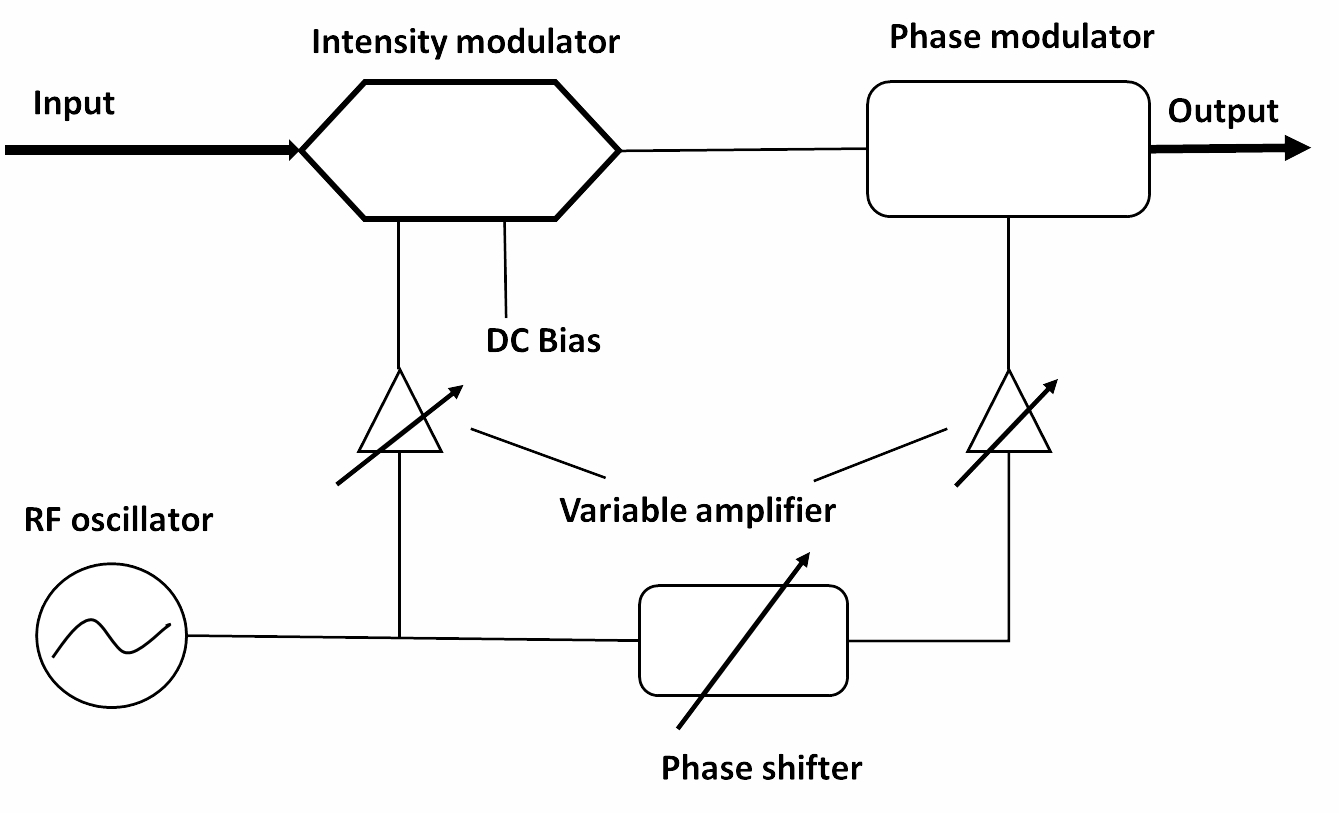
IM and PM are used in tandem to generate optical tones with better flatness as compared to a single modulator [17]. The basic formation for development of OFC using IM and PM is shown in Fig. 4. Optical input is provided by a seed laser whereas electrical input is provided by an RF oscillator. The IM produces the wideband optical spectrum of a comb which is further widened and flattened by the PM.
The normalised electric field of an ideal optical carrier as emitted from a CW laser can be expressed in a complex notation as equation:

where E0 represents the field amplitude, ωc is the carrier frequency, φc is the initial phase, and ec the optical carrier polarisation. Mach-Zehnder modulators (MZMs) can be used as IM and PM. The output at the intensity modulator is represented by [18]:
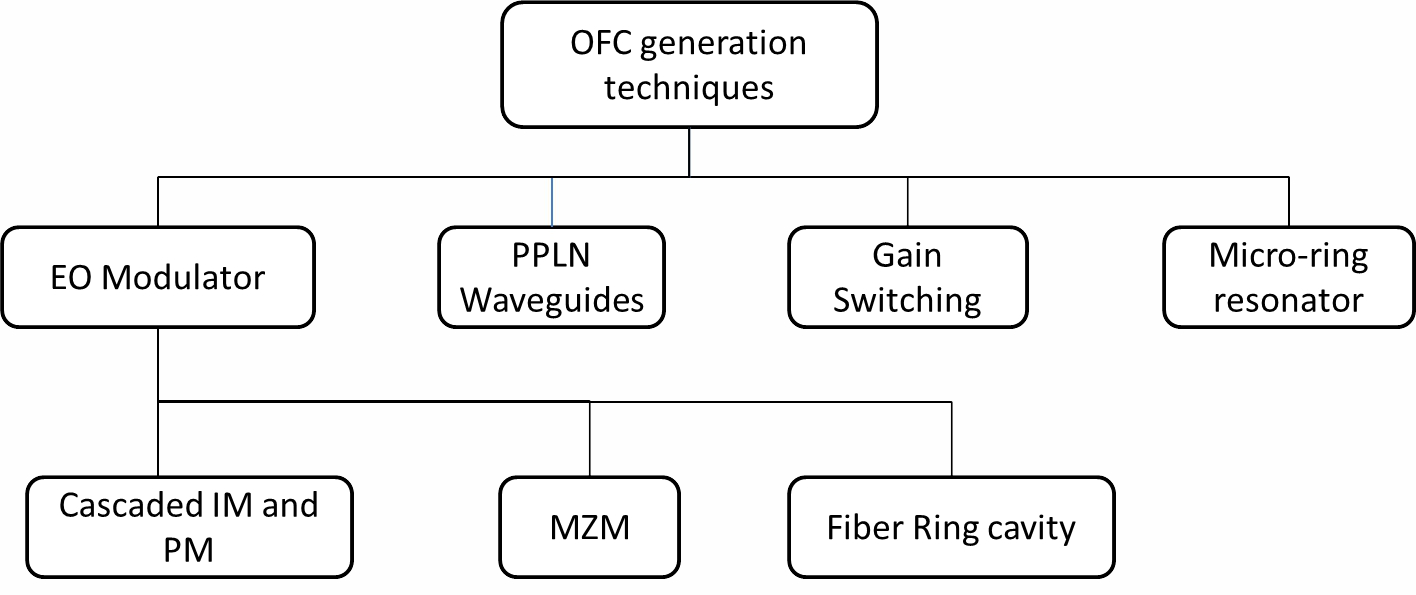
Fig. 2. Hierarchical description of OFC generation schemes.
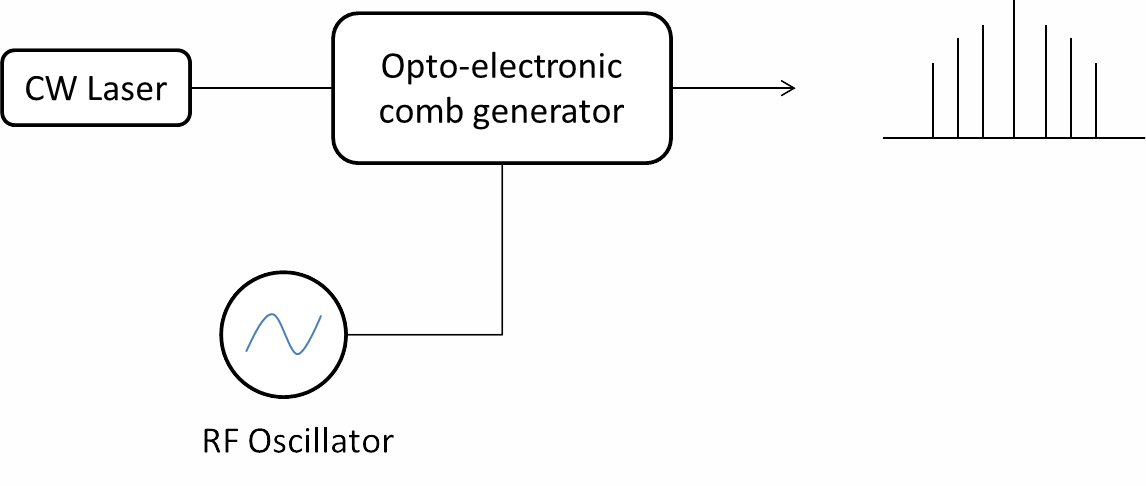
Fig. 3. Basic formation of the EO comb generator.
 (a)
(a)
 (b)
(b)
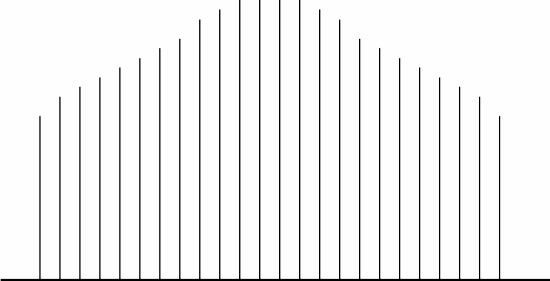
Fig. 4. (a) Cascaded IM and PM-based OFC generation; (b) output OFC.
where Ec(t) represents the input to the IM, γ is the power splitting ratio at MZM, VRF(t) and VDC are the RF and DC bias signals, respectively. IM produces pseudo square waves in time domain and tones in frequency domain. These pulses carry sideband ripples. The output signal of an IM is fed to a PM where spectrum of a comb is further widened and flattened. PM can be represented by [19]:
where Eout(t) represents the final output and Vπ is the necessary driving voltage to achieve a phase shift of π radians. In the above equation, the constant phase shift of the modulator is ignored. The flatness, carrier spacing, and comb bandwidth can be controlled by tuning the modulation indices, frequency of RF signal and bias voltages applied to the modulators.
Fundamental concept of OFC generation using IM and PM has been used with some variations in different research articles. Here, we summarise some notable reports in context of their efficiency and applications.
An optical carrier supply module (OCSM) was reported using EO comb generation and performed a 1.28 Tbps WDM transmission completely covering L and C bands. Instead of using 512 laser sources, OFC generation technique produced these carriers by using only 64 seed lasers with two OCSMs [20].
In another experimental demonstration, we find a design of a comb generator which consists of one amplitude and two PMs that are driven by a 12.5 GHz sinusoidal RF signal and a couple of RF phase shifters. Ullah et al. generated a 23-channel OFC for use in an optical transmission experiment and achieved a performance of a 1.15 Tbps (23 × 50 Gb/s) super channel using a dual-parallel quadrature phase-shift keying (DP-QPSK) modulation with a spectral efficiency of 3.75 b/s/Hz, using a coherent optical orthogonal frequency division multiplexing (CO‑OFDM) [23]. These modulators can be cascaded in four different configurations: (i) serial cascading of two PMs; (ii) cascade of one amplitude and two PMs (serial); (iii) cascade of one AM and two PMs (serial) inside a loop [re-circulating frequency shifter (RFS)]; (iv) cascade of two PMs inside a loop (RFS). They concluded with a better super channel stability in case of IM followed by cascaded PMs without any RFS [21].
Another realisation of the OFC generation based on a PM and a Gaussian band-stop filter has been reported. The proposed scheme only required a simple square-wave driving signal for phase modulation of a CW laser. The flatness and carrier spacing of a comb can be tuned by changing the bandwidth of Gaussian band-stop filter and period of square-wave signal, respectively. The simulation results revealed that 64, 128, 256 comb lines with carrier spacing of 800 MHz, 500 MHz, and 200 MHz were generated [22].
OFC generation using dual-driven lithium-niobate MZM (DD-LiNbO3 MZM) and optical PM series has been reported in [23]. The scheme used a low power sine wave signal of 16.9 dBm as a driving signal from RF source. The electrical input arms of PM and DD-LiNbO3 MZM are driven by a low power RF signal whereas the optical input is provided by the laser source. The PM produces a wide band signal which is further widened by DD-LiNbO3 MZM. The scheme presented 63 carriers with carrier spacing of 20 GHz and flatness around 6 dB. The scheme utilized an optical filter to reduce power fluctuations and observed flatness of 0.12 dB.
Another formation of two IMs in series followed by one PM produced a reasonable characteristics of OFC [18]. Two IMs were driven by a common RF signal generator along with their DC biasing whereas PM was driven by another RF signal generator. This arrangement enhanced the tuning ability of OFC generator for customised channel spacing and overall comb bandwidth. They produced a 24‑channel combs with the best segment of spectrum with 1.1 dB flatness.
An approach for OFC generation in terms of cost, complexity, and spectral purity has been presented in [24]. The scheme used a single RF signal as an input to both MZM and PMs, thus making a less complex approach to OFC generation with high degree of tunability, flatness, and spectral purity. The scheme produced 24 channels with 1.1 dB flatness.
To evaluate the performance of OFCs as a carrier source, reference [25] reported a practical system design with OFC generated carriers. IMs and PMs produced an optical comb which has been used for demonstration of CO-OFDM to achieve 1.008 Tbps. The experiment used 32 comb lines with power fluctuations less than 5 dB. An optical frequency comb can carry 1.008 Tbps on 32 × 106 OFDM sub-carriers in a 318 GHz optical bandwidth with a quadrature amplitude modulation (16-QAM) which corresponds to a spectral efficiency of 3.17 b/s/Hz on each polarisation.
In [26], Eliason et al. present a comb design that will combine a smaller comb tooth spacing with a large bandwidth of a single frequency RF modulation to produce a comb without the limitations of the complex waveform modulation combs and the single frequency modulation combs. By diving electro-optic modulators (EOMs) in series with sequentially lower harmonic frequencies, the authors fill the comb with a low repetition rate while exploiting the bandwidth of a higher repetition rate. Since the EO comb in this scheme is driven by multiple frequencies, phase-locked loops (PLL) are used to lock the phase and frequency sources to a stable reference frequency. In this work, the produced comb has a comb bandwidth of > 120 GHz and a comb tooth spacing (repetition rate) of 80 MHz, which produces a comb that will be useful in spectroscopy and metrology. Table 1 summaries the evolution of the techniques involving cascaded IMs and PMs, highlighting the issues addressed and contributions in the reported research articles.
2.1.2. EO combs based on MZM
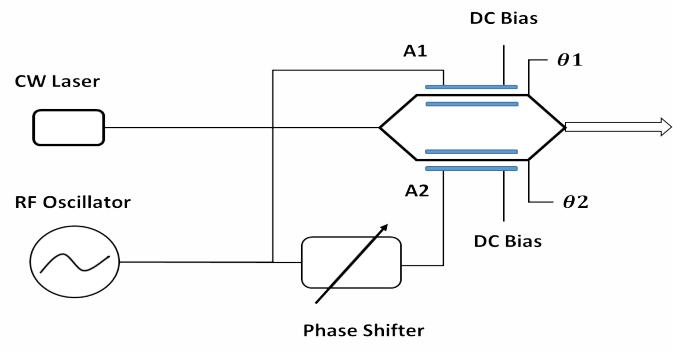
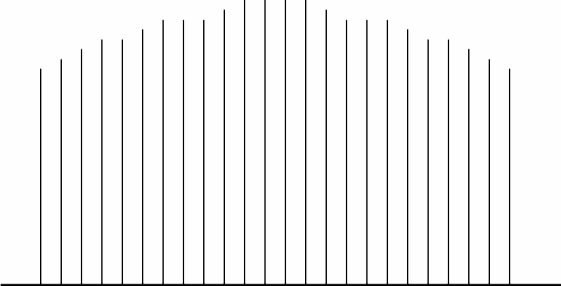
Another method of generating EO-based OFC is to use a dual-drive MZM (DD-MZM). Input optical signal is modulated by two RF signals at DD-MZM. Careful adjustment of the amplitude and phase of the modulating RF signals causes the optical lines to be evenly distributed across the output signal spectrum, resulting in an OFC [29].
The conceptual diagram for OFC generation based on DD‑MZM is shown in Fig. 5. When the optical input is provided by the seed laser and the electrical input is provided by RF oscillators to both arms of DD-MZM, this causes a π phase shift in one arm with reference to other.
 (a)
(a)
 (b)
(b)
Fig. 5. (a) DD-MZM-based OFC generation; (b) output OFC.
Summary of the articles reporting OFC based on cascaded PM and IM.
| Ref. | System configuration | Performance parameters | Acclaimed contribution | Applications | |||
|---|---|---|---|---|---|---|---|
| Channels | Flatness | Spectrum | Spacing | ||||
| [27] | 1 IM and 1 PM in series | 8 | 2 dB | 100 GHz | 12.5 GHz | Only frequency comb generation | Optical communication |
| [21] | 1 AM and 1 PM in series | 23 | Less than 3 dB | 287.5 GHz | 12.5GHz | Experimental comparison in terms of spectral purity and stability | Optical communication and ranging |
| [22] | 1 PM with simple digital driving signal | 64 | 0.5 dB | 51.2 GHz | 800 MHz | Comb spacing tunability with tunable comb-line number | Optical communication and spectroscopy |
| [23] | 1 PM and 1 MZM in series | 63 | 0–6 dB, best at 0.12 dB | 1260 GHz | 20 GHz | RF signal variations control the OFC generation | Ultra DWDM (UDWDM) PONs |
| [24] | 1 PM and 1 electro-absorption modulator (EAM) in series | 19 | 0–3 dB | 694.83 GHz | 36.57 GHz | Comb spacing tenability, optical gain flattening filter is utilized | Optical arbitrary waveform generation, UDWDM systems |
| [18] | two IMs followed by one PM driven by different RF signals | 24 | Gaussian shaped, best at 1.1 dB | 600 GHz | 25 GH | optimisation of OFC based on bias DC voltages and RF signals | Optical transmission band |
| [25] | 1 IM and 1PM in series | 8 | 2 dB | 100 GHz | 12.5 GHz | 64 multiplexed laser signals processed through IM- and PM-based OFC | Achievement of 1.28 Tbps on SMF for 320 km |
| [28] | OFC module | 32 | Less than 5 dB | 318 GHz | 10 GHz | OFC module used for optical transmission | Optical transmission OFC based OFDM for 1 Tbps |
| [20] | 1 IM followed by 2 PMs in series with RF signal generator and phase shifter | 23 | Less than 4 dB | 30 GHz | 13 GHz | Achievement of spectral purity by tuning RF signal and RF phase | Achievement of 1 Tbps in CO-OFDM system |
DC biasing voltages are placed, due to their role, in achieving flatness and spacing between lines. The OFC generated by DD-MZM involved an amplitude modulation of CW light, followed by Kerr nonlinearities to shape the output spectrum. Here, a non-flat spectrum is obtained from the self-phase modulation of both arms. However, both RF and optical phases can be managed with some tuning to achieve a flat spectrum [30].
The normalised electrical field of an ideal optical carrier as emitted from seed laser is represented in (7):

where √ Ps represents the field amplitude, ωs is the frequency, φs is the initial phase. The output voltage from the oscillator can be defined as (8) [18]:

where A0 represents the applied voltage, fRF represents the frequency, and φRF represents the phase of the RF signal. The output at DD-MZM can be described as (9) [31]:
where Ec (t) represents the input to the DD-MZM, VRF and VDC are the RF and DC bias signals, respectively, and Vπ is the modulator modulation index.
The scheme can provide formulas for “ flat spectrum conditions ” and “ maximum efficiency conditions ” by optimising different drive voltages and phase delay differences. The flat spectrum condition is given by (10) [32]:
Here Δ θ = (θ1 − θ2) is the optical phase delay difference between two arms. Δ A = (A1 − A2) is the difference in drive voltages that creates phase difference in each arm. The maximum efficiency condition is described by (11):
The above theoretical concept for the generation of OFC has been adopted in various research articles. We bring here the round-up of some reported works in this section.
DD-MZM-based OFC has been experimentally demonstrated by generating 19 tones with a 4.3 dB flatness and 11 frequency lines with a 1.1 dB flatness [26]. There is a frequency spacing of 10 GHz between produced optical signals. The obtained spectrum is comparable with previous IM and PM cascaded schemes. The drawback of this scheme is that it requires higher RF driving power to obtain higher modulation index. To achieve RF power reduction, the problem can be framed as an optimisation study to seek the optimum value of RF drive signal with the same number of lines and flatness. Second approach to reduce RF power requirements for the generation of OFC uses modulators built with different materials.
In another article, we found a demonstration of a modulator-based comb source on a silicon organic hybrid (SOH) substrate. The SOH-based MZM has low Vπ [33].
The requirement for higher RF power can be reduced by using SOH-based modulators. Here, they used the concept of SOH which combines the organic cladding material with nano-photonic silicon on insulator (SOI) waveguides to produce high-efficiency broadband phase shifters. The proposed scheme had 7 lines with a carrier-spacing of 40 GHz and a flatness of 2 dB. The viability of SOH-based comb source in data transmission was tested by exploring different symbol rates, modulation formats, line spacing, and pulse shapes. The comb carried 1.152Tbps with a 25 GHz line spacing and 4.9 bit/s/Hz spectral efficiency over 300 km on a standard single mode fibre (SSMF). However, these OFCs face higher insertion loss.
Another scheme based on a InP module has been reported to generate an optical comb [30]. The module consists of tuneable laser integrated with MZM. The scheme produces 50% more comb lines and uses 10 dBm less RF drive voltages than the already presented LiNbO3-based modulators. The scheme presented 29 comb lines with a 10 GHz carrier-spacing and a 3 dB flatness.
Another technique used DD-MZM and IM for OFC generation. A frequency multiplication circuit is introduced in comparison with already described schemes. This circuit is used to increase the number of lines while maintaining all other features of the comb. In this technique, a seed laser provides input to both MZMs in parallel. At this stage, 6 lines are generated which are then fed to the first IM, here frequency multiplication phenomena are applied, and 36 comb lines are generated. These comb lines are fed to second IM where 72 lines are generated at the output while having 4 GHz carrier spacing with a 0.12 dB flatness [34]. A single DD-MZM-based OFC has been reported in [35]. The presented comb has the same features as mentioned in the previously cascaded modulator-based combs, while having less complexity and costeffectiveness. They compared the behaviour of a comb with a CW laser source in terms of bit error rate (BER) and transmission distance. A comb exhibited BER of 8 × 10⁻³ vs. 2 × 10⁻² of the laser source centred at 193.2875 THz at a transmission distance of 100 km.
In another research work, we find that DD-LiNbO3 MZM can be operated in three different modes to generate OFCs [36]. These three modes were observed in terms of carrier flatness, comb lines, and tone-to-noise ratio (TNR). Simulation results revealed that 54 comb lines with less than 0.5 dB flatness having a TNR of 45 dB are achieved with 2.78 Vπ and 3.33 Vπ bias voltages. Most of MZMbased schemes require high RF voltages but this scheme used low driving voltages due to optimisation of different modes of operation for achieving low RF values.
An approach to the OFC generation based on cascaded MZM and EAM has also been reported [37], where Fan and Li used a periodic Gaussian-shaped pulse signal to drive MZM and EAM which is controlled with binary sequences. They investigated the impact of a Gaussian-shaped pulse signal on the number of lines, and this scheme provided 35 comb lines with a 2.14 dB flatness and a carrier spacing tuneability of 1–10 GHz. Table 2 summarises the evolution of OFC generation using MZM and recent advances.
2.1.3. Fibre ring cavity-based combs
Resonance of an optical signal in cavities leads to another approach for generation of optical combs. These schemes
OFC based on MZM.
| Ref. | System configuration | Performance parameters | Acclaimed contribution | Applications | |||
|---|---|---|---|---|---|---|---|
| Channels | Flatness | Spectrum | Spacing | ||||
| [32] | 1 DD-MZM | 11, 19 | 1.1, 1.3 dB | 352 GHz | 32 GHz | The scheme requires high RF driving power to obtain higher modulation index | Microwave/ millimeter wave photonics |
| [38] | 1 DD-MZM | 8 | Less than 1 dB | 287.5 GHz | 12.5 GHz | OFDM implementation based on comb. Low drive power required | OFDM transmission systems, DWDM systems |
| [30] | 1 DD-MZM | 29 | 3 dB | 290 GHz | 10 GHz | Experimental demonstration of InP-based devices | OFDM systems, DWDM systems |
| [34] | 1 DP-MZM and 1 IM in series | 72 | 0.26 dB | 288 GHz | 4 GHz | Frequency multiplication circuit is introduced to double the number of lines | DWDM systems arbitrary waveform generation |
| [23] | 1 DD-MZM | 34, 54 | 0, 0.5 dB | 340, 540 GHz | 10 GHz | The scheme requires low RF drive voltages but achieving high efficiency | High-speed Tbp/s transmission networks |
| [37] | 1 MZM and 1 EAM with Gaussian-shape pulse signal | 35 | 2.14 dB | 350 GHz | 10 GHz | Theoretical model, influence of Gaussian-shaped pulse signal, chirp factor of EAM on performance of OFC are discussed | UDWDM techniques, microwave photonic signal processing |
| [31] | 2 FMs and 1 MZM | 71 | Less than 2 dB | 284 GHz | 4 GHz | The influence of phase of RF signals on power variations has been investigated | Next generation optical networks |
| [39] | 1 DD-MZM and 1 SOH-based PM | 7, 9 | 2 dB | 150, 360 GHz | 25, 40 GHz | 1.008 Tbit/s NRZ-QPSK transmission up to 300 km, higher insertion loss | DWDM transmission systems |
| [35] | 1 DD-MZM | 21 | Less than 0.5 dB | 787.5 GHz | 37.5 GHz | In the purposed scheme, BER is reduced to 1 × 10⁻³ for 100 km | Future elastic optic networks (EON) |
provide an alternative to increasing comb spectral bandwidth. In this scheme, multi-carriers are generated by placing EOM in an optical cavity and driving EOM resonantly at a free spectral range (FSR) of the cavity. A single-cavity system with EOM generates combs with efficiency dependent on cavity characteristics such as transmission and reflectivity [40].
In coupled cavity systems, the output of the first cavity is coupled with the second cavity. The interaction of coupled cavities and their particular characteristics shape the final comb. Repetition rate of the comb is dependent on cavity parameters and modulation frequency [41].
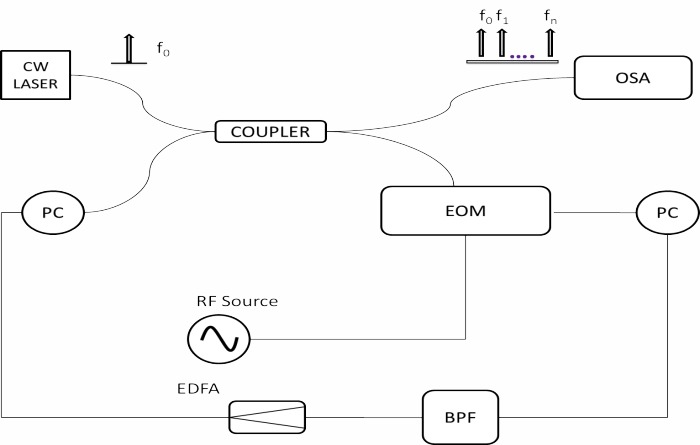
Let us consider the optical signal for a single-cavity comb generation. The continuous light wave from laser as a seed source is represented in (12):
The optical signal is applied to a fibre loop which acts as a single cavity to resonate the optical signal. In this fibre loop, an optical signal goes through Kerr non-linearity and dispersion effects followed by a controlled modulation by EOMs. An optical coupler can be used to seek a version of optical output which is a comb in nature. The general form of an output optical signal has the form described in (13):

were fr represents the repetition rate in the loop, fc represents the driving frequency of EOM, and k is the integer representation of spectral lines. It shows that a shift of frequency f1 = f0 + fr is generated. Due to a recirculation structure, a series of shifted frequencies such as f2 = f0 + 2fr, f3 = f0 + 3fr,..., fk = f0 + k fr can be generated [42].
Single cavity OFCs can be extended to coupled cavity OFCs in order to gain a better bandwidth control and power distribution amongst generated tones. The concept diagram of cavity and EOM-based OFCs is shown in Fig. 6.
We find a reasonable number of research articles to report the cavity-based optical combs. We mention here some contributions and focus on their application in optical communication. The early work on a fibre ring cavity based-OFC was reported in the literature having 54 lines but with poor flatness [43]. An experimental demonstration of a cavity-based comb has been reported at a FSR of 25 GHz with 103 lines in a 1.8 THz span within a 40 dB power envelop [44].
 (a)
(a)
 (b)
(b)
Fig. 6. (a) Fibre ring cavities-based OFC generation; (b) output spectrum.
A method of generating OFC using PMs in the loop has been reported to produce 113 lines with a 5 dB spectral flatness at a 25 GHz spacing, and a 26 dB TNR in 22.6 nm. These tones have been used for transmission of data at 11.2 Tbps using OFDM on an SMF over a span of 640 km [45].
Another couple cavity-based technique using an I/Q modulator in the re-circulating loop has been reported in [42]. The scheme can produce OFC with 50 lines within a 2 dB spectral flatness at a 10.7 GHz frequency spacing. The number of generated carriers can be controlled by using an optical band pass filter. In the scheme, the author observed that a 50[th] carrier tone had a carrier-to-noise ratio (CNR) of 22.2 dB and, also reduced the input power required by erbium-doped fibre amplifier (EDFA). Later the same number of carriers achieved a spectral flatness of 1 dB at a carrier spacing of 12.5 GHz with the last carrier having a CNR of 38 dB.
Micro-laser-based OFC with 26 lines at a 25 GHz carrier spacing has also been reported in [46]. This scheme involved a non-linear frequency conversion process in order to reduce Brillouin scattering time. Semiconductor optical amplifiers (SOAs) have been used in the fibre loop to achieve the OFC generation. First, an ultra-long SOA can support the maximum number of wavelengths generated in the loop. Second, SOA-based OFCs exhibit an excellent super mode rejection effect with a small relaxation oscillation which guarantees a stable lasing performance. This scheme presented 30 lines with an FSR of 20 GHz.
In [47], we observed a single PM and an amplifier in a fibre re-circulating loop with a spectrum expander, using a 1 km long highly non-linear fibre and four wave mixing phenomena. With this arrangement, they produced 201 comb lines with a 30 dB power deviation having an FSR of 20 GHz. It can support many channels in the DWDM systems and can be further extended to UDWDM systems.
In [48], Zhang et al. demonstrate the OFC generation with a high SNR, based on a Brillouin amplified recirculating frequency shifter loop (RFSL). The proposed scheme uses a multi-channel narrow-gain Brillouin amplifier, which can suppress the amplified spontaneous emission (ASE) noise in the system as was the case with EDFA-based techniques. Results reveal that the SNR is improved from 12 dB to 30 dB. The proposed OFC generation with a high-SNR performance plays an essential role in the development of optical communications and spectroscopy. Table 3 summarises the works based on this technique.
2.2. Combs based on non-linearities in periodically poled lithium niobate (PPLN) waveguides
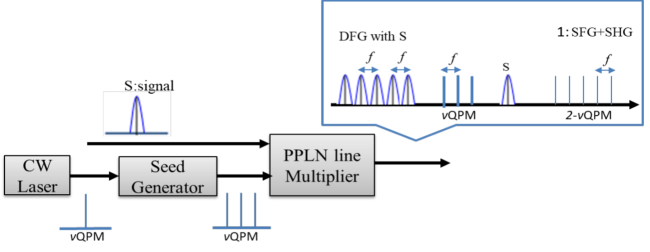
OFCs can be generated by utilizing periodically poled lithium niobate (PPLN) waveguides (PPLN WG) where a non-linear phenomenon of sum frequency generation (SFG), second harmonic generation (SHG), and difference frequency generation (DFG) are cascaded [52]. The PPLN waveguides provide good efficiency for non-linear conversion of wavelengths. Periodic poling of LN crystals provides the 2nd order high-efficiency quasi-phase matching (QPM). PPLN WGs are developed by a deliberate introduction of a periodic structure at crystal level [53]. This periodic structure facilitates the non-linear interactions of applied signals to achieve phase matching conditions necessary of non-linear interactions and produce QPM condition. When a strong optical signal (photons at λp) is pumped to a PPLN WG, it undergoes a non-linear process due to periodically poled ferroelectric crystals of PPLN to generate the second harmonic of the input signal with photons as λSHG = λp/2. This process is called SHG [54]. In case of injecting another optical signal at wavelength λs, PPLN WG causes an interaction of a newly injected signal with an already pumped signal and its second harmonic to generate multiple signals at summation or difference of interacting signal frequencies. These processes are called SFG and DFG, consecutively. In SHG, the input signal S with two photons having the same wavelength λs is mixed up to generate a new photon at half of their wavelength λ1/2, doubling the frequency due to an interaction among periodically poled crystals and light. SFG effect mixes up two photons at λs and λp to produce a new photon at λSFG, as described in (14):
In generating difference frequency, two photons at λs and λp are combined to produce a third photon at λDFG as stated in (15) [55]:

A CW across the PPLN QPM frequency (νQPM) is fed to a seed generator, i.e., a non-linear element generating frequency-locked and equally spaced lines within the QPM band. A number of seed carriers, three in this case, equally spaced by a frequency interval f, are transmitted through the PPLN [56]. Another signal named S which is to be multicast is fed to the PPLN line multiplier. These carriers interact, thus creating new contributions centred at 2νQPM, due to the occurrence of SFG and SHG among them.
OFC based on fibre ring cavities.
| Ref. | System configuration | Performance parameters | Acclaimed contribution | Applications | |||
|---|---|---|---|---|---|---|---|
| Channels | Flatness | Spectrum | Spacing | ||||
| [43] | Single cavity based on PM in the loop. | 54 | Poor flatness | Variable | Variable | This was theoretical work, only time domain model was presented | Optical communication |
| [44] | Single cavity based on PM in the loop. | 103 | 40 dB | 2575 GHz | 25 GHz | First experimental demonstration of the concept but with poor flatness | Optical time division multiplexing (OTDM)/DWDM systems |
| [45] | RFSL with cascaded phase modulators | 113 | 5 dB | 2825 GHz | 25 GHz | Experimental comb, low-phase noise of 130 dBc/Hz at 1 MHz offset | High-speed optical communication |
| [49] | InP-based comb generator using PM in the cavity | 5, 6 | 3, 5 dB | 50, 84 GHz | 10, 14 GHz | Experimental comb, fibre instabilities are removed, provides tenability | Optical communication |
| [42] | OFC generation based on I/Q modulator in the single cavity | 50, 69 | Less than 2 dB | 535 GHz | 10.7 GHz | Provides frequency spacing control, low driving voltages, less sensitive to phase noise | Ultra-high speed optical communication |
| [50] | Polarisation modulator-based RFSL | 50 | Less than 1 dB | 625 GHz | 12.5 GHz | Re-circulation time is greatly reduced in the scheme for RFSL | High-accuracy optical sensor, precise optical metrology |
| [46] | OFC generation based on MZM in the loop | 30 | 5 dB | 600 GHz | 20 GHz | First-time application of ultra-long SOA in OFC to support maximum number of wavelengths in the fibre loop | DWDM systems |
| [47] | RFSL based on PM with spectrum expander | 201 | 30 dB | 4020 GHz | 20 GHz | Experimental comb, comb is further broadened with the help of a highly nonlinear fibre (HNLF) | DWDM optical communication systems |
| [51] | OFC based on DD-MZM and bi-directional RFSL | 71 | 0.76 dB | 284 GHz | 4 GHz | Simple structure, optical filter is used in the scheme to reduce noise | Precise measurement, sensing |
Considering three equally spaced seed carriers, five lines arise at 2νQPM due to the SFG and SHG interaction as shown in Fig. 7.
We find a reasonable number of research articles to report the PPLN WGs-based optical combs. We mention here some contributions and focus on their application in optical communication.
A high-power, near-linear 100 fs-level Tm-doped fibre oscillator–amplifier system has been used to demonstrate self-referencing of a Tm fibre laser pumped source. A single PPLN WG was used to perform both octavespanning sub-carrier generation, as well as carrier envelope-offset frequency sensing. The fibre oscillator was mode-locked by a non-linear polarisation rotation and generated pulses as short as 70 fs with an average power of 30 mW at 72 MHz. The scheme produced 11 lines with a poor flatness of 40 dB at a carrier spacing of 72 MHz [57].
Fig. 7. OFC based on PPLN WGs involves non-linear phenomena, namely SFG and DFG.
Another article reported the generation of an optical comb within a PPLN WG starting from four independent CWs and exploiting an SFG cascaded with DFG, and SHG. The scheme is compact and did not require high RF power as needed in the case of EOM-based schemes. Compared to the MLL-based schemes, better flexibility in combs spacing is achieved by tuning the input wavelengths. Since the CW lasers are independent, therefore, the generated comb is not coherent. By using phase-locked seed lasers, a coherent optical output comb can be obtained. The scheme generated 19 coherent lines with a carrier spacing of both 25 and 20 GHz with a 15 dB flatness [58]
A tunable and coherent comb in a PPLN WG has been reported by exploiting a multi-wavelength Brillouin erbium fibre laser (MBEFL). This scheme is different from other PPLN-based schemes in using a single CW laser and MBEFL instead of multiple lasers and MZM combinations in other schemes. The Brillouin frequency shift can be tuned by temperature and stress, therefore the spectral spacing of the OFCs can also be tuned by temperature and stress. The scheme generated 8 lines at 10 GHz carrier spacing with a 4.8 dB flatness [59]
Comb generation at shorter wavelengths less than 500 nm has been reported in [60]. The output of a mode‐ locked erbium fibre laser with a repetition rate of 107 MHz was used as the light source. The laser light was amplified to over 100 mW using an erbium-doped fibre amplifier.
Subsequently, the amplified pulse train was spectrally broadened to the range of 1000–2000 nm in HNLF. The spectral broadening of a comb was investigated in two different types of PPLN WGs: 1) a single‐pitch PPLN WG with a QPM pitch of 7.6000 μm and 2) a dual‐pitch PPLN WG with its first‐stage QPM pitch chirped from 18.175 to 18.250 μm and a second‐stage QPM pitch of 6.6625 μm. The single-pitch PPLN WG was designed for wavelength conversion from 798 nm to 399 nm (SHG). In their experiment, they used a single pitch PPLN WG to generate a 399 nm comb. The dual‐pitch PPLN WG was designed for wavelength conversion from 1542 nm to 514 nm, in which the first and second stages are for SHG (1542 nm→771 nm) and SFG (1542 nm+771 nm→ 514 nm), respectively. Table 4 summarises the state of art showing contributions of each work.
2.3. Combs based on gain-switched laser
The generation of pulses in semiconductor lasers by gain switching technique was reported in early 1980s [62], but using this technique for a multi-carrier generation was proposed in 2009 [63]. The major advantage of this schematic is its internal stability without applying bias control. In this scheme, an MLL is switched on and off rapidly by applying an oscillating RF signal in the gain section of the laser [64]. The laser is driven at a relaxed
OFC based on PPLN WGs.
| Ref. | System configuration | Performance parameters | Acclaimed contribution | Applications | |||
|---|---|---|---|---|---|---|---|
| Channels | Flatness | Spectrum | Spacing | ||||
| [57] | Self-referenced Tm-doped fibre and PPLN-WG system | 11 | 40 dB | 792 MHz | 72 MHz | Experimental demonstration | First experimental demonstration of comb generation |
| [58] | Multiple seed lasers with PPLN-WG system | 19 | 15 dB | 380 GHz | 20 GHz | Provides flexibility in terms of line spacing and number of lines with no need of high RF power | Optical communication |
| [54] | Seed generator with PPLN WGs | 5 | 5–15 dB | 62.5 GHz | 12.5 GHz | PPLN-based multi-wavelength source used in sliceable bandwidth variable transponders | Optical clocks, arbitrary waveform generation, EON |
| [59] | MBEFL-based PPLN waveguides | 8 | 4.8 dB | 80 GHz | 10 GHz | Provides tune ability in terms of central wavelength and number of lines. | UDWDM, short optical pulse generation |
| [56] | PPLN WGs based on optical frequency metrology | 12 | Less than 10 dB | 300 GHz | 2 GHz | Self-reference carrier-envelope offset (CEO) beat signal is produced, 2N-1 line for N seed lines, multicasting demonstrated | Optical clocks, frequency metrology |
| [60] | PPLN WGs used SMF, EDF, and HNLF | Lines covered less than 500 nm spectrum | Less than 10 dB | Less than 500 GHz | 107 GHz | Analysis of spectral broadening of comb based on two different types of PPLN WGs was investigated | Astrophysics, spectroscopy |
| [61] | PPLN-based power efficient combs | 47 | Less than 5 dB | 1175 GHz | 25 GHz | Reduced input pump power, producing maximum number of lines | Optical computing, light detection and ranging |
frequency of oscillation that makes the first spike excitation, and the electrical pulse ceases before the second spike. If the switching RF signal were of the appropriate frequency, the photon density would not be able to reach a state before the gain section is turned off. This effect leads to the pulse generation based on the RF frequency [65].
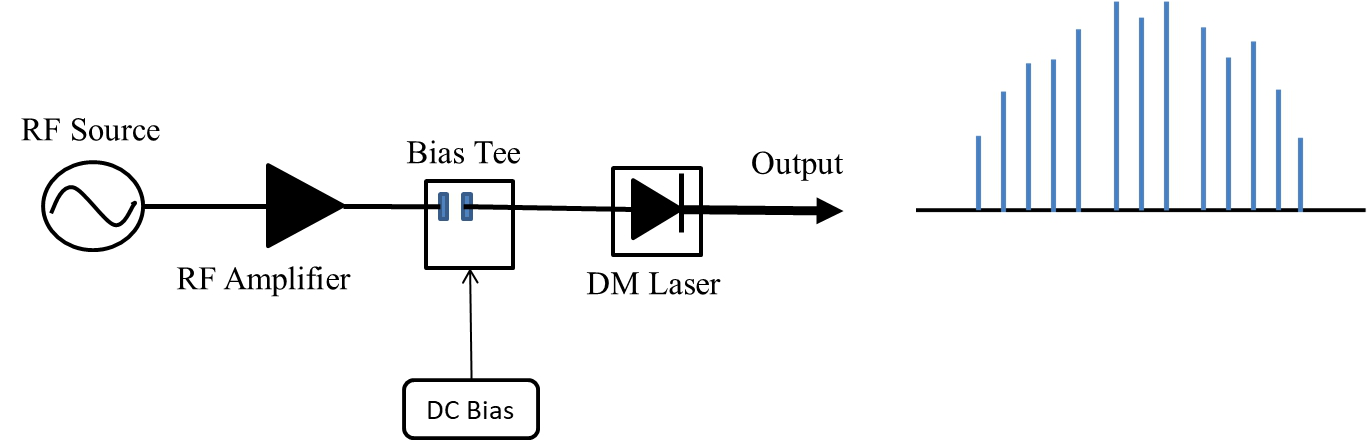
A desired frequency sine wave is amplified with an RF amplifier. A bias tee is used to combine DC bias with RF signal to enable gain switching of the MLL as illustrated in the Fig. 8.
The rate equations for lasers including spontaneous emission and carrier recombination present an OFC generation, starting from a free-running state to the final state. The single-laser field rate equations for a slowly varying field envelope E and carrier density N take the following form [55]:

Symbols in (16) are defined in Table 5. Where E represents the normalised optical power, R(N) represents the carrier recombination term R(N) = AN + BN2 + CN3 and KcEinj represents the external injection for the master laser.
The main flaw of this scheme is timing jitter when pulses are generated with the help of direct modulation. Timing jitter is reduced by using the optical injection with gain switching [66]. This flaw limits its applicability in OTDM systems. The repetition rate of generated pulses is inversely proportional to sub-carrier spacing of the corresponding comb spectrum [67].
In this work, we describe some noteworthy research articles which reported comb generation using gain-switched lasers.
Vertical-cavity surface-emitting laser (VCSEL)-based gain-switched OFC has been reported with 20 lines at 6.25 GHz carrier spacing within a 3 dB ripple in [68], where Serrano et al. demonstrated the ability of a single commercially available VCSEL to implement a tunable OFC with a significant number of optical lines and with good flatness directly in a one-stage scheme, without the necessity of other external components. It is also highly energy-efficient, as the bias current requirements are below 10 mA and the needed RF modulation power is around 15 dBm. The CNR of tones was not considered as spectrum shows only a 5 dB CNR.
An interesting description in [69] explains two concepts in one frame. First, the generation of incoherent and broad optical pulses by gain switching and, second, an improved coherence with the help of optical injection and pulse excitation. The combination of both techniques allows the generation of high-quality OFCs at a repetition frequency of 500 MHz, showing a low-noise optical spectrum with unprecedent features in terms of width (108 tones within 10 dB) and flatness (56 tones within 3 dB) in comparison with those previously reported for this modulation frequency. By this technique, they experimentally generated a broad OFC with repetition frequencies less than 1 GHz, without using expansion stages. The generated comb had 108 lines at a 500 MHz carrier spacing with a 10 dB spectral flatness.
An OFC generation scheme reported in [70] claimed cost-efficiency by using a dual-tone monolithic integrated semiconductor laser (DT-MISL). First, DT-MISL was tuned under a self-oscillating microwave synthesiser, and the undamped period-one (P1) state was realised after
Fig. 8. OFC based on gain-switched lasers.
Laser parameters.
| Symbol | Quantity | Value |
|---|---|---|
| A | Non radiative carrier lifetime | 1× 10⁹ s−1 |
| B | Bimolecular recombination coefficient | 1× 10⁻¹⁶ m3/s |
| C | Auger recombination coefficient | 1× 10−41 m6/s |
| a | Differential gain | 8× 10⁻¹³ m3/s |
| αH | Linewidth enhancement factor | 4 |
| N0 | Carrier density concentration at transparency | 1× 1024 m−3 |
| V | Volume of active region | 6× 10⁻¹⁷ m3 |
optical to electrical conversion. The beating signal was amplified with enough gain to cause a DT-MISL to enter the gain switching state, resulting in the formation of different OFCs with different wavelength spacing. In this scheme, neither external reference nor high-speed EOM is required, making the scheme simple and cost-effective. The proposed scheme had resulted in 17 comb lines with a 114.448 GHz bandwidth and 10 dB power variations.
An alternative method to generate and characterise a monolithically injected locked gain-switched laser based on OFC is to use an integrated photonic platform [71]. Srivastava et al. showed that injection locking of two overlapping spectra from a gain-switched laser and a common mode-lock laser results in a broad OFC and increased bandwidth. As the master and slave lasers are integrated on the same photonic integrated circuit (PIC), therefore this results in the additional advantages of reduced cost, energy efficiency, and a smaller footprint compared with discrete component implementation. They produced 36 and 42 comb lines with 3 and 10 dB flatness at the same carrier spacing of 6.25 GHz.
An external gain-switched multi-carrier source can adopt internal properties of the master laser, and thus typically shows low RIN and linewidth. This concept has been used in another article to achieve an optical comb for a WDM system [55]. In WDM systems, data rates of about 2.1 Tb/s having a higher spectral efficiency of 7.8 bits/s/Hz can be acquired by using gain-switched laser as multicarrier sources.
A gain-switched DFB laser-based comb having 8 lines at 15 GHz carrier spacing with a 10 dB spectral width was achieved [67]. The carriers generated through gainswitched laser were used in optical communication to achieve 10 Gbps on each carrier with the help of a wavelength conversion scheme. The use of gain-switched comb source enables the design of a reconfigurable wavelength converter that allows the conversion of data to a desired wavelength. The researcher demonstrated the wavelength conversion of data by utilizing a coherent optical receiver in the QPSK format. They showed a penalty-free wavelength conversion of a 10.7 GBaud quadrature phase-shift keying (QPSK) signal over a span of 90 GHz utilizing gain-switched comb source.
In [72], Tao et al. present a gain-switched weak resonant cavity Fabry-Pérot laser diode (GS WRC-FPLD)based scheme under a multi-wavelength optical injection for generating an OFC with multiple comb lines, wide bandwidth, and tunability. The four-wave mixing (FWM) phenomena are introduced in the scheme, a light source having four wavelengths with an interval of 0.56 nm is obtained and taken as multi-wavelength injection locking after power equalisation. By investigating the performances of the OFC under different parameters, the influences of the parameters on the performances of the OFC are revealed. The scheme generated 147 lines at an FSR of 2 GHz having approximately a 292 GHz bandwidth under optimised injection parameters. The scheme shows unique features like low FSR, tunability, larger bandwidth, and can possess applications in the field of high-density optical communication and spectroscopy. Table 6 summarises the evolution of the above reported technique.
2.4. Micro resonator-based OFC
Another technique of the OFC generation that has recently gathered interest of research, uses the Kerr non-linearity to induce the parametric oscillation in high-Q microcavities [76]. OFC generation by this method has been demonstrated in multiple platforms such as silica microspheres MgF2 resonators, CaF2 resonators, silica microtoroids, silicon-nitride micro-rings and high-index silica-glass micro-rings [77]. Silicon-nitride micro-rings are especially attractive, since the coupling waveguides and resonator can be monolithically integrated. This can lead to a design of an on-chip OFC source that is robust and environmentally isolated [78].
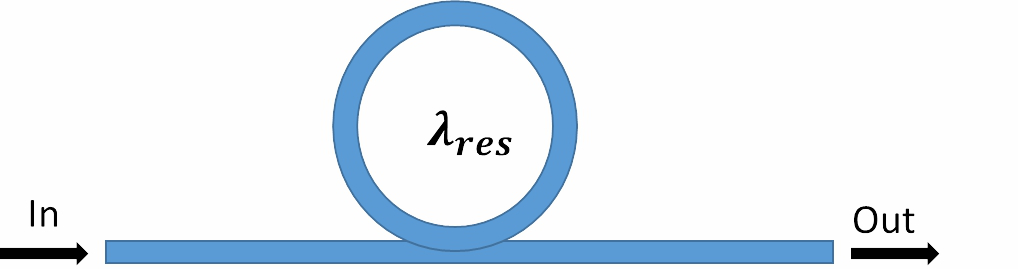
The micro-resonators depend upon whispering gallery phenomena in which a few wavelengths can travel in the ring. These wavelengths increase in intensity round by round due to constructive interference [79]. The wavelength passing through the micro-resonator can be calculated by the following equation:

where R represents the radius of the ring and k represents the integer. The light in the ring is guided by the phenomena of a total internal reflection at the interface of dielectric material and surrounding air. A few microresonator shapes are commercially available such as sphere, toroid, cylinder, and disk. These structures support very high Q whispering gallery (WG) modes [80]with field intensity concentrated at dielectric-air interface.
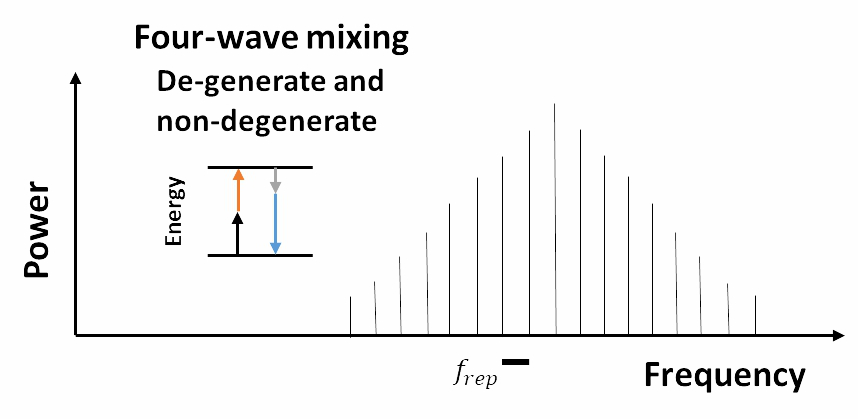
The OFC generation in the micro-resonator ring is dependent upon degenerate and non-degenerate FWM process and is initiated by applying a pump signal into the ring. This non-linear frequency conversion process depends upon the refractive index n:
where n0 represents the linear refractive index, n2 represents the Kerr coefficient, and I represents the laser intensity. When a third order non-linearity material-based micro-resonator is pumped with a CW laser, two pump photons having frequency ωp are annihilated to produce a new pair of photons: one of them is frequency up-shifted signal ωs and the other is frequency down-shifted idler ωi. The conservation of energy can be represented in the following equation:

where h represents the reduced Planck constant and shows that the side bands are equally spaced with pump [55]:
When the idler and signal frequencies coincide with the modes of a micro-resonator, it enhances the parametric process which resulted in sidebands generation. Next, the generated sidebands and idler frequencies serve as seed for further parametric frequency conversion. This phenomenon is known as a non-degenerate FWM or cascaded FWM.
OFC based on gain-switched lasers.
| Ref. | System configuration | Performance parameters | Acclaimed contribution | Applications | |||
|---|---|---|---|---|---|---|---|
| Channels | Flatness | Spectrum | Spacing | ||||
| [73] | Single DM laser-based OFC generation | 13 | 10 dB | 130 GHz | 10 GHz | First demonstration of GS DM laser to generate OFC | OTDM/DWDM systems |
| [68] | Gain-switching of VCSEL based-OFC | 20 | 3 dB | 120 GHz | 6.25 GHz | Phase correlation between comb lines has been investigated | Gas spectroscopy |
| [69] | GS of slave laser and combined the output with master laser to generate OFC | 108, 56 | 10, 3 dB | 54, 28 GHz | 500 MHz | Broad OFCs having spectral lines with FSR less than 1 GHz, without further expand stages | Absorption spectroscopy, dual-comb spectroscopy |
| [70] | GS of dual-tone semiconductor laser-based self-oscillating OFC | 17 | 10 dB | 91 GHz | 5.369 GHz | Work on requirements fort the external laser power source was completed | Multi-carrier microwave signals generation |
| [71] | Mutually injected locked-lasers- based OFC | 36, 42 | 3, 10 dB | 225, 262.5 GHz | 6.25 GHz | Two combs are overlapped using two slave lasers and one master laser; expansion of a comb bandwidth up to 256.25 GHz | Future elastic optic networks (EONs) |
| [67] | Single commercial off-the-shelf (COTS) discrete-mode (DM) gain-switched (GS) laser-based PON network | 8 | 1.3 dB | 80 GHz | 10 GHz | 8 × 10.7 Gb/s DPSK data transmission in DWDM-PON scenario | WDM-PON |
| [74] | GS comb source with variable channel spacing | 8 | 10 dB | 120 GHz | 15 GHz | Phase correlation, penalty free wavelength conversion of 10.7 GBaud QPSK data | Optical communication |
| [75] | GS distributed feedback laser (DFB) driven by large sinusoidal signal | 8 | 3 dB | 535 GHz | 12.5 GHz | 2.5 GBaud 16-QAM data rate to each user over 50 km of SSMF without inline amplification | Next generation UDWDM-PON |
| [72] | GS WRC-FPLD under multi wavelength optical injection | 147 | 10 dB | 292 GHz | 2 GHz | The scheme is characterised by single-sideband (SSB) phase noise, −115 dBc/Hz at 10 kHz, which means that lines have strong coherence and stability | High-density optical communication spectroscopy |
This non-degenerate FWM process can produce an equidistant multiple frequency components spanning over 500 nm [79]. The OFC generation in micro-resonator ring is shown in Fig. 9.
The micro-resonator can produce thousands of lines, while these lines suffer from amplitude variations and phase noise. Another drawback of this scheme is the limited FSR tunability and the comb carrier envelope frequency [81]. This method of generating OFC has been explored in various research articles. A brief description of this research area is presented here in this section.
The demonstration of a micro-resonator-based comb by injecting a 130 mW pump signal at 1550 nm into a 75 µm diameter micro-cavity has been reported in an article. Their scheme generated 70 lines with a uniform mode spacing [82].
High pump power for comb generation in a MRR is an important concern. A research article addressed this concern and achieved comb generation at a relatively lower pump power [83]. Xuan et al. reported a comb with a 25 GHz FSR based on a 600 nm thick SiN microresonator having an intrinsic Q of 17 million. The comb initiation power was shown to be extremely low as 5.6 mW which is due to a high Q of the resonator (increase in Q results in a quadratic decrease of pump power).
Another interesting formation for OFC is based on temporal solitons [84]. These combs are described by the Lugiato-Lefever equation and can carry 95% of the total power by background radiation mechanism. A few methods for their efficient control and generation are under consideration to establish these soliton combs as out-of-lab tool.
 (a)
(a)
 (b)
(b)
Fig. 9. (a) OFC based on micro-ring resonator (MRR), (b) output spectra.
Bao et al. demonstrated 50 nm wide soliton combs carrying 14 lines at an FSR of 36 MHz with a 15 dB flatness, having a mode efficiency of 75% vs. a theoretical threshold limit of 5% for Lugiato-Lefever solitons.
In [85], Boggio et al. presented a hybrid Mach-Zehnder MRR architecture. In this architecture, dissipative Kerr solitons (DKSs) are generated within the second cavity which has twice the optical path length and acts as a feedback portion. The interaction of fields from the feedback portion and the ring enables the unmatched control of pump depletion. This fact allowed to numerically show that above 80% of the pump power can be transferred into comb lines. The frequency conversion efficiency is limited by pump power that can be stored in the ring for sustained DKSs propagation. The proposed architecture is experimentally demonstrated by producing a variety of DKSs having up to 55% conversion efficiency.
We find the demonstration of micro-resonator-based combs in DWDM systems [86]. The comb generated in a 116 µm resonator consist of 100 new wavelengths spanning over 200 nm having an FSR of 200 GHz. After eliminating the pump signal, filtering and amplification, 6 lines were modulated carrying capacity of 10 Gbps data signal. The BER of these lines were measured to be 10-9 in back-to-back scenario.
A pulse-driven soliton OFC with a minimum on-chip pump power of 1.70 mW at an FSR of 25 GHz is experimentally demonstrated [87]. Impact of the pulse chirp desynchronisation and power on soliton features like locking range, steps, and pump-to-comb conversion efficiency are considered both experimentally and numerically. Zhang et al. investigated that pulse chirp gives rise to phase shifts influencing the non-linearity-dispersion balance affecting the locking range. The results show that the novel dynamics of pulse-driven solitons could facilitate the progress of efficient chip-based broadband soliton micro-comb systems with electronics-detectable repetition rate. Table 7 summarises evolution of the technique.
OFC based on micro-resonator.
| Ref. | System configuration | Performance parameters | Acclaimed contribution | Applications | |||
|---|---|---|---|---|---|---|---|
| Channels | Flatness | Spectrum | Spacing | ||||
| [82] | OFC generation forms a monolithic micro-resonator | 38 | 10 dB | 33250 GHz | 875 GHz | Only comb generation | Optical communications |
| [78] | OFC generation based on CaF2 resonator | 14 | 4 dB | 350 GHz | 25 GHz | Experimental comb with a record-low repetition rate | Microwave photonics, frequency synthesis |
| [83] | High-Q silicon nitride micro-resonator-based OFC | 3 | 40 dB | 75 GHz | 25 GHz | MRR OFC with a record-low pump power of 5.6 mW | Optical clocks, frequency metrology |
| [86] | OFC generation based on lithium niobate micro-resonator | 900 | 20 dB | 225, 262.5 GHz | 10 GHz | Specifically designed for efficient dual-comb spectroscopy and highly reconfigurable comb-based ranging | Ranging, spectroscopy |
| [84] | Laser cavity-soliton micro-cavity-based frequency combs | 14 | 15 dB | 504 GHz | 36 GHz | MRR OFC with low pump power | Microwave photonics, frequency synthesis |
| [85] | Kerr soliton comb generation in micro-resonator with interferometric back coupling | 4 | 15 dB | 114 GHz | 28.5 GHz | The proposed architecture presents a DKS-based frequency conversion efficiency up to 55% | Astronomy, spectroscopy |
| [79] | High-performance silicon nitride resonator-based OFC | 6 | 20 dB | 1200 GHz | 200 GHz | 60 GB/s data transmission based on 6 comb tones over 10 km | DWDM systems |
3. Comparative analysis of different OFC generation schemes
This section provides a comparison amongst different OFC generation techniques, discussed in the previous sections (Table 8). The combs are usually selected based on applications for which specific features of carriers are required. Therefore, no single solution can address all the target situations. It appears from this survey that EO modulation-based OFC dominate the multi-carrier generation techniques. The OFCs with desired characteristics can be generated with EO modulation that is integrable, flexible, and scalable.
Optical combs up to hundred optical lines have been achieved with an analysis of their transmission characteristics. However, carrier spacing is restricted to less than 50 GHz, and the high-power electrical amplifiers are required to drive the modulators. OFCs based on a single and DD-MZM are power-efficient, costeffective, and can provide 8 to 10 lines. As a result, they are applicable to real systems with modular transceiver. Multiple EO devices can be cascaded for increasing the OFC spectral bandwidth. Cascading the PM and IM is the most attractive method that can produce tens of lines with ultra-flatness. OFCs using a cascaded PM offer greater stability but have a limited number of lines with smaller footprint and insertion loss.
RFS combs without cascading several modulators provide a larger spectral bandwidth by shifting frequency repeatedly in the fibre ring. RFS combs using PMs have relatively poor flatness because of decaying amplitudes of two sidebands in each circulation. Frequency and phase difference of the overlapped tones can degrade the stability of the generated OFC. Fibre rings based on IQ modulators solve the problem of tone overlap, which implies SSB frequency shifting, however, bias control mechanism is required for bias drifting issues. In a SSB RFS combs, crosstalk is the main factor affecting the comb quality. It is dependent on operating conditions, IQ modulator device imperfection, and frequency shifter quality. In both types, the number of lines is limited due to noise accumulation in the fibre ring from EDFA, which decreases TNR. Fibre ring-based OFC suffer limited range problem over which the laser can be tuned.
Combs generated by PPLN-based waveguides are not feasible from energy, space, and cost-efficiency perspective. However, they can be used in other architectures where all the transponders in a network shared a single centralised carrier source. Although combs based on PPLN are integratable, compact, flexible, support efficient multicasting, and exhibit narrow line width but they are still suffering certain limitations. The current solutions have low extinction ratio, poor flatness, low line conversion efficiency, and high-power penalty. Moreover, the achievable FSR and comb bandwidth are limited by the PPLN QPM bandwidth. The PPLN devices are also temperature sensitive.
Micro-resonator-based OFC generation is a relatively new scheme for multi-wavelength (MW) sources. It has ability to generate a multitude of lines spanning over hundreds of nanometers. Moreover, micro-rings based on silicon nitride provide flexibility of integration with other photonic devices. The main drawback of micro-rings-based combs is the need to use a high-power pump laser for triggering the non-linear process. Other disadvantages include limited tunability of FSR, phase stability, and good amplitude.
Gain-switching technique enables the direct modulation of a COST laser for OFC generation. The main advantages of this technique include cost-efficiency, simplicity, highdegree of flexibility, low tone linewidth, small footprint, and excellent stability. However, above features can be acquired with conjunction of an external injection. Using the photonic integration, shortcomings and complexities of external injection can be compensated. Disadvantages of this technique includes high-power consumption and limited number of generated tones. The latter disadvantages can be resolved by expanding the comb at the expense of cost and complexity.
4. Challenges of multi-carrier sources
Multi-carrier sources are advantageous over standard laser for long-haul communication; there are some challenges which should be addressed if multi-carrier sources are to be used in commercial systems.
4.1. Amplification stages
In most cases, comb lines are the sidebands of the seed signal, and the source power (laser) is divided between these lines. As a result, the individual tone power is lower than the required power for commercial systems. Therefore, they require an additional amplification stage to increase the output power, which in turn result in an increased cost.
Comparison of different OFC generation schemes.
| OFC scheme | Maximum lines reported with good flatness |
Maximum flatness (dB) |
Advantages | Suitable applications |
|---|---|---|---|---|
| EO combs | 256 | 0.5 | Easy to implement | Spectroscopy |
| FRC combs | 71 | 0.76 | Reduced complexity | Sensing |
| PPLN WG | 47 | 5 | Simple structure | Optical computing |
| GS combs | 108 | 10 | Reduced RF power | Spectroscopy |
| MRR combs | 900 | 20 | Maximum lines | Ranging |
4.2. Free spectral range limitations
Unlike individual lasers, where any channel separation can be achieved, carrier spacing is limited in OFC. This is due to the device bandwidth constraints involved in OFC generation. This challenge/limitation can be overcome by using devices with a higher EO bandwidth.
4.3. Asymmetric carrier spacing
OFC inherently generates equally spaced lines. Therefore, asymmetric spacing between lines presents another challenge in using the multi-carrier sources.
4.4. De-multiplexing/tunable filtering
Another challenge associated with the multi-carrier source is the need for an additional stage of de-multiplexing or filtering stage to route the lines to separate modules. These filters should be tunable to meet the disparate bandwidth needs. Designing a tunable optical filter with low cost and complexity, offering excellent optical characteristics, is a major challenge.
5. Conclusions
From the discussions and survey presented in this paper, it can be concluded that OFCs can be instrumental for next generation optical communication networks. However, these sub-carrier sources must provide stability, optical performance, and significant cost savings if they are going to replace integrated lasers or standard lasers. These techniques can provide few to several dozen or even several hundred lines with varying characteristics, but no one can fit in all the application scenarios. The choice of the suitable OFC and its characteristics depends upon the nature of target application. The techniques having tens of lines are beneficial for the modular design, where a specific transponder module requires a sub-system for generating specific sub-carriers. This survey compiles the most important scientific publications on OFC generation techniques and their specific applications. We concluded this article with a description of challenges facing OFCs, which provide future research directions in this area.
6. Disclosures
The authors declare that there are no financial interests, commercial affiliations, or other potential conflicts of interest that could have influenced the objectivity of this research or the writing of this paper.
7. Code, Data, and Materials Availability
As this is a review article comprehensively covering the developments and issues in the field of optical comb generation, all the information provided has been carefully cited. The references are also available in this article. Discussions made in this article are the authors’ contribution. The figures and tables have been developed based on the cited material. Moreover, the corresponding author will be available to share any data on query and arrange the figures on public forums.
Acknowledgements
This work is a collaborative academic work by the authors as part of our project on the development of optical fibre devices for high-speed optical networks.
References
[1] Dallaglio, M., Giorgetti, A., Sambo, N., Velasco, L. & Castoldi, P. Routing, spectrum, and transponder assignment in elastic optical networks. J. Light. Technol. 33, 4648–4658 (2015). https://doi.org/10.1109/JLT.2015.2477898
[2] Liu, H., Du, Y., Li, X., Ji, X. & Su, Y. Spectrally programmable optical frequency comb generation. ACS Photonics 11, 5195–5204 (2024). https://doi.org/10.1021/acsphotonics.4c01422
[3] Hall, J. L. Optical frequency measurement: 40 years of technology revolutions. IEEE J. Sel. Top. Quantum Electron. 6, 1136–1144 (2000). https://doi.org/10.1109/2944.902162
[4] Hänsch, T. W. Nobel lecture: Passion for precision. Rev. Mod. Phys. 78, 1297–1309 (2006). https://doi.org/10.1103/RevModPhys.78.1297
[5] Steinmetz, T. et al. Laser frequency combs for astronomical observations. Science 321, 1335–1337 (2008). https://doi.org/10.1126/science.1161030
[6] Chou, C. W., Hume, D. B., Rosenband, T. & Wineland, D. J. Optical clocks and relativity. Science 329, 1630–1633 (2010). https://doi.org/10.1126/science.1192720
[7] Newbury, N. R. Searching for applications with a fine-tooth comb. Nat. Photon. 5, 186–188 (2011). https://doi.org/10.1038/nphoton.2011.38
[8] Vikram, B. S., Selvaraja, S. K. & Supradeepa, V. R. Optical frequency comb synthesis for super channel based high-bandwidth data communication. CSI Trans. ICT 6, 33–38 (2018). https://doi.org/10.1007/s40012-017-0184-6
[9] Torres-Company, V. & Weiner, A. M. Optical frequency comb technology for ultra-broadband radio-frequency photonics. Laser Photonics Rev. 8, 368–393 (2014). https://doi.org/10.1002/lpor.201300126
[10] Diddams, S. A. The evolving optical frequency comb [Invited]. J. Opt. Soc. Am. B 27, B51 (2010). https://doi.org/10.1364/josab.27.000b51
[11] Delfyett, P. J. et al. Advanced ultrafast technologies based on optical frequency combs. IEEE J. Sel. Top. Quantum Electron. 18, 258–274 (2012). https://doi.org/10.1109/JSTQE.2011.2114874
[12] Fujiwara, M. et al. Optical carrier supply module using flattened optical multicarrier generation based on sinusoidal amplitude and phase hybrid modulation. J. Light. Technol. 21, 2705–2714 (2003). https://doi.org/10.1109/JLT.2003.819147
[13] Gerstel, O., Jinno, M., Lord, A. & Yoo, S. J. Elastic optical networking: A new dawn for the optical layer? IEEE Commun. Mag. 50, 12–20 (2012). https://icg.isy.liu.se/phd-courses/optical_networking/EON.pdf
[14] Holzwarth, R. et al. Optical frequency synthesizer for precision spectroscopy. Phys. Rev. Lett. 85, 2264–2267 (2000). https://doi.org/10.1103/PhysRevLett.85.2264
[15] Hall, J. L. Nobel lecture: Defining and measuring optical frequencies. Rev. Mod. Phys. 78, 1279–1295 (2006). https://doi.org/10.1103/RevModPhys.78.1279
[16] Ali, A, A., Eltahir, I. K. & Ali, E. S. Advanced techniques for optical frequency comb generation using optical modulators: A comprehensive survey. Results Opt. 21, 100849 (2025). https://doi.org/10.1016/j.rio.2025.100849
[17] Dutta-Roy, A. A tutorial on the flexible optical networking paradigm: State of the art, trends, and research challenges. Proc. IEEE 102, 1312–1316 (2014). https://doi.org/10.1109/JPROC.2014.2341314
[18] Sharma, V., Singh, S. & Lovkesh. Design of tunable optical frequency comb generation based on EO modulator. Photonic Netw. Commun. 44, 133–140 (2022). https://doi.org/10.1007/s11107-022-00984-w
[19] Lewerenz H.-J. Photons in Natural and Life Sciences. Springer Series in Optical Sciences (Singer, 2007). - https://doi.org/10.1007/978-3-642-23749-2
[20] Suzuki, H. et al. 12.5-Ghz spaced 1.28-Tb/s (512-channel × 2.5 Gb/s) super-dense WDM transmission over 320-km SMF using multiwavelength generation technique. IEEE Photonics Technol. Lett. 14, 405–407 (2002). https://doi.org/10.1109/68.986828
[21] Ferreira, R. J. L., Rocha, M. D. L., Da Silva, E. P. & Pataca, D. M. Cascade of Amplitude- and Phase-Modulator in Four Different Configurations of Superchannel Generation. in 2013 SBMO/IEEE MTT-S Inernational. Microwave Optoelectronics Conference 1–5 (IEEE, 2013). https://doi.org/10.1109/IMOC.2013.6646587
[22] Shen, J., Wu, S. & Li, D. Ultra-flat optical frequency comb generation based on phase modulation with simple digital driving signal. Optik (Stuttg) 198, 163254 (2019). https://doi.org/10.1016/j.ijleo.2019.163254
[23] Ullah, S. et al. Ultra-wide and flattened optical frequency comb generation based on cascaded phase modulator and LiNbO3-MZM offering terahertz bandwidth. IEEE Access 8, 76692–76699 (2020). https://doi.org/10.1109/ACCESS.2020.2989678
[24] Ullah, R. et al. Ultrawide and tunable self-oscillating optical frequency comb generator based on an optoelectronic oscillator. Results Phys. 22, 103849 (2021). https://doi.org/10.1016/j.rinp.2021.103849
[25] Suzuki, H., Fujiwara, M. & Iwatsuki, K. Application of superDWDM technologies to terrestrial terabit transmission systems. J. Light. Technol. 24, 1998–2005 (2006). https://doi.org/10.1109/JLT.2006.871115
[26] Eliason, T., Parker, P. A. & Reber, M. A. R. EO frequency comb generation via cascaded modulators driven at lower frequency harmonics. Opt. Express 32, 36394–36404 (2024). https://doi.org/10.1364/oe.537836
[27] Fujiwara, M., Kani, J., Suzuki, H., Araya, K. & Teshima, M. Flattened optical multicarrier generation of 12.5 GHz spaced 256 channels based on sinusoidal amplitude and phase hybrid modulation. Electron. Lett. 37, 967–968 (2001). https://doi.org/10.1049/el:20010612
[28] Yi, X., Fontaine, N. K., Scott, R. P. & Yoo, S. J. B. Multi-Band Coherent Optical OFDM Receiver Enabled by Optical Frequency Combs. in 36th European Conference and Exhibition on Optical Communication 1–3 (IEEE, 2010). https://doi.org/10.1109/ECOC.2010.5621196
[29] Sakamoto, T., Kawanishi, T. & Izutsu, M. Asymptotic formalism for ultraflat optical frequency comb generation using a MachZehnder modulator. Opt. Lett. 32, 1515–1517 (2007). https://doi.org/10.1364/ol.32.001515
[30] Slavík, R., Farwell, S. G., Wale, M. J. & Richardson, D. J. Compact optical comb generator using InP tunable laser and pushpull modulator. IEEE Photonics Technol. Lett. 27, 217–220 (2015). https://doi.org/10.1109/LPT.2014.2365259
[31] Ujjwal & Kumar, R. Optical frequency comb generator employing two cascaded frequency modulators and Mach–Zehnder modulator. Electronics 12, 2762 (2023). https://doi.org/10.3390/electronics12132762
[32] Sakamoto, T., Kawanishi, T. & Izutsu, M. Optimization of ElectroOptic Comb Generation Using Conventional Mach-Zehnder Modulator. in 2007 International Topical Meeting on Microwave Photonics 50–53 (2007). https://doi.org/10.1109/MWP.2007.4378133
[33] Alloatti, L. et al. 100 GHz silicon-organic hybrid modulator. Light Sci. Appl. 3, e173 (2014). https://doi.org/10.1038/lsa.2014.54
[34] Zhang, T. & Wu, S. Optical frequency comb generation based on dual-parallel Mach–Zehnder modulator and intensity modulator with RF frequency multiplication circuit. Photon. Netw. Commun. 36, 256–262 (2018). https://doi.org/10.1007/s11107-018-0777-5
[35] Lopez Sanchez, D. A., Cardenas Soto, A. M. & Granada Torres, J. J. Optical Frequency Comb Generation based on MZM for Elastic Optical Networks. in 2019 IEEE Colombian Conference on Communications and Computing (COLCOM) 1–4 (IEEE, 2019). https://doi.org/10.1109/ColComCon.2019.8809126
[36] Sharma, V. & Singh, S. Progress in optical frequency comb generation techniques towards flexible optical communication network. J. Opt. 27, 043021 2025, https://doi.org/10.1088/2040-8986/adb1f2
[37] Fan, Y. & Li, P. Optical frequency comb based on cascaded MZMEAM with Gaussian-shaped pulse signal. Opt. Eng. 60, 056105 (2021). https://doi.org/10.1117/1.oe.60.5.056106
[38] Mishra, A. K. & Tomkos, I. A Novel Cost-Effective Combline Generation and Cross-Talk Mitigation in Optical OFDM Signal Using Optical iFFT Circuits. in 2011 18th International Conference on Telecommunications ICT 2011 107–112 (IEEE, 2011). https://doi.org/10.1109/CTS.2011.5898900
[39] Weimann, C. et al. Silicon-organic hybrid (SOH) frequency comb sources for terabit/s data transmission. Opt. Express. 22, 3629– 3639 (2014). https://doi.org/10.1364/oe.22.003629
[40] Kanno. A. & Kawanishi, T. Phase noise analysis of an optical frequency comb using single side-band suppressed carrier modulation in an amplified optical fiber loop. IEICE Electron. Express 9, 1473–1478 (2012). https://doi.org/10.1587/elex.9.1473
[41] Li, J., Li, X., Zhang, X., Tian, F. & Xi, L. Analysis of the stability of recirculating frequency shifter used as a multi-tone wideband light source for Tb/s multi-carrier optical transmission. Eur. Conf. Opt. Commun. 2010, 26–28 (2010). https://doi.org/10.1109/ECOC.2010.5621302
[42] Lin, J. et al. Low noise optical multi-carrier generation using optical-FIR filter for ASE noise suppression in re-circulating frequency shifter loop. Opt. Express 22, 7852–7864 (2014). https://doi.org/10.1364/oe.22.007852
[43] Ho, K.-P. & Kahn, J. M. Optical frequency comb generator using phase modulation in amplified circulating loop. IEEE Photonics Technol. Lett. 5, 721–725, 1993, https://doi.org/10.1109/68.219723
[44] Bennett, S., Cai, B., Burr, E., Gough, O. & Seeds, A. J. 1.8-THz bandwidth, zero-frequency error, tunable optical comb generator for DWDM applications. IEEE Photonics Technol. Lett. 11, 551– 553 (1999). https://doi.org/10.1109/68.759395
[45] Zhang, J., Yu, J., Dong, Z., Shao, Y. & Chi, N. Generation of full C-band coherent and frequency-lock multi-carriers by using recirculating frequency shifter loops based on phase modulator with external injection. Opt. Express 19, 26370–26381 (2011). https://doi.org/10.1364/oe.19.026370
[46] dos Santos, M. L. M., Huancachoque, L., Pereira, A. I. N. B., Nascimento, D. V. G. & Bordonalli, A. C. Optical Frequency Comb Generation Using Ultralong SOA and Different Amplification Methods in MZM-based Optical Fiber Loops. in 2019 SBMO/IEEE MTT-S Int. Microw. Optoelectron. Conf. IMOC 2019 2019–2021 (IEEE, 2019). https://doi.org/10.1109/IMOC43827.2019.9317555
[47] Wang, F. & Kang, W. Wideband optical frequency comb generation using a fiber re-circulating loop cascaded with a spectrum expander including highly nonlinear fiber. Opt. Appl. 51, 181–191 (2021). https://doi.org/10.37190/oa210203
[48] Zhang, X., Xu, Y., Wang, Y. & Bao, H. High signal-to-noise ratio optical frequency comb generation based on a Brillouin amplified recirculating frequency shifter loop. Opt. Laser Technol. 181, 111907 (2025). https://doi.org/10.1016/j.optlastec.2024.111907
[49] Dupuis, N et al. InP-Based Comb Generator for Optical OFDM. in Optical Fiber Communication Conference/National Fiber Optic Engineers Conference 2011 466–472 (Optica Publishing Group, 2011). https://doi.org/10.1364/ofc.2011.pdpc8
[50] Li, R., Wu, S., Ye, S. & Cui, Y. Very flat optical frequency comb generation based on polarization modulator and recirculation frequency shifter. J. Opt. Commun. 39, 7–12 (2017). https://doi.org/10.1515/joc-2016-0108
[51] Duran, V. et al. Optical frequency combs generated by acoustooptic frequency-shifting loops. IEEE Photonics Technol. Lett. 31, 1878–1881 (2019). https://doi.org/10.1109/LPT.2019.2947655
[52] Thorlabs. Periodically Poled Lithium Niobate (PPLN) – Tutorial 686–690 https://www.yumpu.com/en/document/read/28396747/periodicallypoled-lithium-niobate-ppln-tutorial-thorlabs (2014).
[53] Lee, J. S. et al. Meeting the electrical, optical, and thermal design challenges of photonic-packaging. IEEE J. Sel. Top. Quantum Electron. 22, 8200209 (2016). https://doi.org/10.1109/JSTQE.2016.2543150
[54] Scaffardi, M., Vercesi, V., Sgambelluri, A. & Bogoni, A. Hitless reconfiguration of a PPLN-based multiwavelength source for elastic optical networks. J. Opt. Commun. Netw. 8, 85–92 (2016). https://doi.org/10.1364/JOCN.8.000085
[55] Imran, M., Anandarajah, P. M., Kaszubowska-Anandarajah, A., Sambo, N. & Poti, L. A survey of optical carrier generation techniques for terabit capacity elastic optical networks. IEEE Commun. Surv. Tutor. 20, 211–263 (2018). https://doi.org/10.1109/COMST.2017.2775039
[56] Yoshii, K., Nomura, J., Taguchi, K., Hisai, Y. & Hong, F. L. Optical frequency metrology study on nonlinear processes in a waveguide device for ultrabroadband comb generation Phys. Rev. Appl. 11, 054031 (2019). https://doi.org/10.1103/PhysRevApplied.11.054031
[57] Phillips, C. R. et al. Supercontinuum generation in quasi-phasematched LiNbO3 waveguide pumped by a Tm-doped fiber laser system. Opt. Lett. 36, 3912–3214 (2011). https://doi.org/10.1364/ol.36.003912
[58] Scaffardi, M., Pinna, S., Lazzeri, E. & Bogoni, A. Generation of a flexible optical comb in a periodically poled lithium niobate waveguide. Opt. Lett. 39, 1733–1736 (2014). https://doi.org/10.1364/ol.39.001733
[59] Xiong, H., Sun, J., Zhang, R. & Liu, Y. Tunable optical frequency comb generation in a periodically poled lithium niobate waveguide based on stimulated Brillouin scattering. J. Mod. Opt. 64, 1683– 1687 (2017). https://doi.org/10.1080/09500340.2017.1310319
[60] Goji, Y., Chen, C., Ikeda, K., Yoshii, K. & Hong, F. L. Towards generation of optical frequency comb in the short-wavelength visible region using periodically poled lithium niobate waveguides. Results Opt. 2, 100035 (2021). https://doi.org/10.1016/j.rio.2020.100035
[61] Zhang, K. et al. A power-efficient integrated lithium niobate EO comb generator. Commun. Phys. 6, 17 (2023). https://doi.org/10.1038/s42005-023-01137-9
[62] van der Ziel, J. & Logan, R. A. Generation of short optical pulses in semiconductor lasers by combined dc and microwave current injection. IEEE J. Quantum Electron. 18, 1340–1350 (1982). https://doi.org/10.1109/JQE.1982.1071707
[63] Rosado, A. et al. Experimental study of optical frequency comb generation in gain-switched semiconductor lasers. Opt. Laser Technol. 108, 542–550 (2018). https://doi.org/10.1016/j.optlastec.2018.07.038
[64] Weber, A. G., Ronghan, W., Bottcher, E. H., Schell, M. & Bimberg, D. Measurement and simulation of the turn-on delay time jitter in gain-switched semiconductor lasers. IEEE J. Quantum Electron. 28, 441–446 (1992). https://doi.org/10.1109/3.123271
[65] Lam, C. F. Passive Optical Networks: Principles and Practice. (Academic Press, 2007).
[66] Tarucha, S. & Otsuka, K. Response of semiconduct laser to deep sinusoidal injection current modulation. IEEE J. Quantum Electron. 51, 810–816 (1981). https://doi.org/10.1109/JQE.1981.1071186
[67] Maher, R. et al. Implementation of a cost-effective optical comb source in a WDM-PON with 107Gb/s data to each ONU and 50 km reach. Opt. Express 18, 15672–15681 (2010). https://doi.org/10.1364/oe.18.015672
[68] Serrano, A. R. C. et al. VCSEL-based optical frequency combs: Toward efficient single-device comb generation. IEEE Photonics Technol. Lett. 25, 1981–1984 (2013). https://doi.org/10.1109/LPT.2013.2280700
[69] Rosado, A. et al. Enhanced optical frequency comb generation by pulsed gain-switching of optically injected semiconductor lasers. Opt. Express 27, 9155–9163 (2019). https://doi.org/10.1364/oe.27.009155
[70] Li. J. et al. Self-oscillating optical frequency comb generation based on the gain-switching dual-tone semiconductor laser. Optik (Stuttg). 246, 167849 (2021). https://doi.org/10.1016/j.ijleo.2021.167849
[71] Srivastava, M. et al. Monolithically integrated optical frequency comb generator based on mutually injection locked gain switched lasers. IEEE J. Sel. Top. Quantum Electron. 29, 1–8 (2023). https://doi.org/10.1109/JSTQE.2023.3305829
[72] Tao, Y., Wang, Q., Ou, P., Xia, G. & Wu, Z. Broadband optical frequency comb generation utilizing a gain-switched weakresonant-cavity Fabry–Perot laser diode under multi-wavelength optical injection. Photonics 11, 912 (2024). httpps://doi.org/10.3390/photonics11100912
[73] Anandarajah, P. M. et al. Highly Coherent Picosecond Pulse Generation with Sub-Ps Jitter and High SMSR by Gain Switching Discrete Mode Laser Diodes at 10 GHz Line Rate. in Optical Fiber Communication Conference and National Fiber Optic Engineers Conference 1–3 (Optica Publishing Group, 2009). https://doi.org/10.1364/ofc.2009.owj3
[74] Anthur, A. P. et al. Penalty-free wavelength conversion with variable channel separation using gain-switched comb source. Opt. Commun. 324, 69–72 (2014). https://doi.org/10.1016/j.optcom.2014.03.041
[75] Anandarajah, P. M., Huynh, T., Vujicic, V., Zhou, R. & Barry, L. P. UDWDM PON with 6 × 2.5GBaud 16-QAM Multicarrier Transmitter and Phase Noise Tolerant Direct Detection. in Optical Fiber Communication Conference, OSA Technical Digest Opt. OFC 2015 Th2A.58 (Optica Publishing Group, 2015). https://doi.org/10.1364/ofc.2015.th2a.58
[76] Del’Haye, P., Beha, K., Papp, S. B. & Diddams, S. A. Selfinjection locking and phase-locked states in microresonator-based optical frequency combs. Phys. Rev. Lett. 112, 043905 (2014). https://doi.org/10.1103/PhysRevLett.112.043905
[77] Kaur, G. & Jana, S. Tunable optical frequency comb in a microresonator using amplitude and frequency modulation. J. Opt. 54, 2895–2903 (2025). https://doi.org/10.1007/s12596-024-01976-x
[78] Kippenberg, T. J., Holzwarth, R. & Diddams, S. A. Microresonator-based optical frequency combs. Science 332, 555– 559 (2011). https://doi.org/10.1126/science.1193968
[79] Okawachi, Y. et al. Octave-spanning frequency comb generation in a silicon nitride chip. Opt. Lett. 36, 3398–3400 (2011). https://doi.org/10.1364/ol.36.003398
[80] Savchenkov, A. A. et al. Tunable optical frequency comb with a crystalline whispering gallery mode resonator. Phys. Rev. Lett. 101, 093902 (2008). https://doi.org/10.1103/PhysRevLett.101.093902
[81] Del’Haye, P., Arcizet, O., Schliesser, A., Holzwarth, R. & Kippenberg, T. J. Full stabilization of a microresonator-based optical frequency comb. Phys. Rev. Lett. 101, 053903 (2008). https://doi.org/10.1103/PhysRevLett.101.053903
[82] Del’Haye, P. et al. Optical frequency comb generation from a monolithic microresonator. Nature 450, 1214–1217 (2007). https://doi.org/10.1038/nature06401
[83] Xuan, Y. et al. High-Q Silicon Nitride Microresonator for Low Power Frequency Comb Initiation at Normal Dispersion Regime. in CLEO: Science and Innovations 2015 STu1I.6 (Optica Publishing Group, 2015). https://doi.org/10.1364/CLEO_SI.2015.STu1I.6
[84] Bao, H. et al. Laser cavity-soliton microcombs. Nat. Photonics 13, 384–389 (2019). https://doi.org/10.1038/s41566-019-0379-5
[85] Boggio, J. M. C. et al. Efficient Kerr soliton comb generation in micro-resonator with interferometric back-coupling. Nat. Commun. 13, 1292 (2022). https://doi.org/10.1038/s41467-022-28927-z
[86] Ferdous, F. et al. Spectral line-by-line pulse shaping of on-chip microresonator frequency combs. Nat. Photonics 5, 770–776 (2011). https://doi.org/10.1038/nphoton.2011.255
[87] Zhang, C., Miao, R., Yin, K., Cheng, X. & Jiang, T. Impact of pulse chirp and desynchronization on chip-based pulse-driven soliton microcombs. ACS Photonics 12, 1609–1618 (2025). https://doi.org/10.1021/acsphotonics.4c02412