
Antagonistic profiling of volatile and non-volatile secondary metabolites produced by Trichoderma asperellum towards pathogenic Fusarium oxysporum f. sp. cicero
DOI:
https://doi.org/10.24425/jppr.2026.2965Abstract
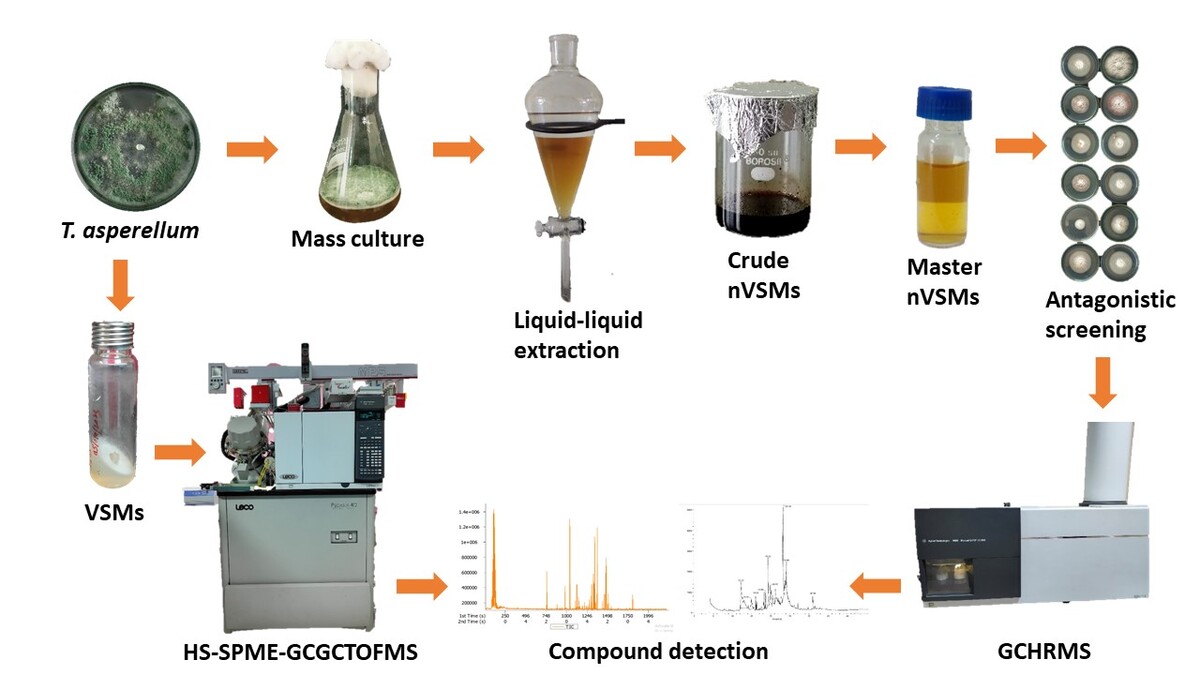
Fungi of the genus Trichoderma are widely marketed as biocontrol agents against plant pathogens. However, some Trichoderma species may produce toxic secondary metabolites, underscoring the need for comprehensive safety assessments to ensure their ecological safety. In this study, the antifungal activities of volatile secondary metabolites (VSMs) and non-volatile secondary metabolites (nVSMs) produced by six Trichoderma asperellum strains (TaSrBh, TaSrYa, TaSrBu, TaSrUm, TaSrGa, and TaSrCh) were evaluated against the chickpea wilt pathogen Fusarium oxysporum f. sp. ciceri. Bioassays of VSMs and nVSMs revealed that TaSrGa and TaSrYa exhibited the strongest antifungal activity. The ethyl acetate extract of the TaSrYa strain showed excellent growth inhibition (60–100%) of F. oxysporum f. sp. ciceri, prompting further investigation into its metabolic profile. To identify potential fungicidal compounds, spectroscopic analyses were performed on the ethyl acetate extract of TaSrYa. The predominant compounds identified included 9-octadecenoic acid (26.32%), dehydroacetic acid (25.71%), 9-undecenal 2,10-dimethyl (11.31%), 7,10-octadecadienoic acid (8.62%), 9,12,15-octadecatrienoic acid 2,3-dihydroxypropyl ester (Z,Z,Z) (6.18%), and cis-Z-α-bisabolene epoxide (4.96%), which are likely responsible for inhibiting pathogen growth. Additionally, two-dimensional gas chromatography and spectroscopic analyses of volatiles from TaSrGa identified 67 VSMs, categorized as alcohols, alkanes, esters, acids, and terpenes. The examined T. asperellum strains demonstrated strong antagonistic effects against the pathogen responsible for chickpea wilt, suggesting that these biocontrol agents could be used in the formulation of natural fungicides, offering an eco-friendly alternative to synthetic fungicides.
References
Abboud M.A., Ismail K.S., Mashraqi A., Albishi S., Al-Namazi A.A., Masrahi Y.S. 2023. GC-MS analysis and antibacterial activities of some plants belonging to the genus Euphorbia on selected bacterial isolates. Open Chemistry 21: 20220325. DOI: https://doi.org/10.1515/chem-2022-0325 DOI: https://doi.org/10.1515/chem-2022-0325
Abdelmoteleb A., Gonzalez-Mendoza D., Zayed O. 2023. Cell-free culture filtrate of Trichoderma longibrachiatum AD-1 as alternative approach to control Fusarium solani and induce defense response Phaseolus vulgaris L. plants. Rhizosphere 25: 100648. DOI: https://doi.org/10.1016/j.rhisph.2022.100648 DOI: https://doi.org/10.1016/j.rhisph.2022.100648
Abdenaceur R., Farida B., Fatma, S.H. 2024. Volatile organic compounds activities of Trichoderma species isolated from olive grove soil against the wilt pathogen, Verticillium dahliae. Europian Journal of Plant Pathology 170: 789–803. DOI: 10.1007/s10658-024-02839-8 DOI: https://doi.org/10.1007/s10658-024-02839-8
Adelusi O.A., Gbashi S., Adebiyi J.A., Makhuvele R., Adebo O.A., Aasa A.O., Targuma S., Kah G., Njobeh P.B. 2022. Variability in metabolites produced by Talaromyces pinophilus SPJ22 cultured on different substrates. Fungal Biology and Biotechnology 9: 15. DOI: https://doi.org/10.1186/s40694-022-00145-8 DOI: https://doi.org/10.1186/s40694-022-00145-8
Al-Askar A.A., Rashad E.M., Moussa Z., Ghoneem K.M., Mostafa A.A., Al-Otibi F.O., Arishi A.A., Saber W.I.A. 2022. A novel endophytic Trichoderma longibrachiatum WKA55 with biologically active metabolites for promoting germination and reducing mycotoxinogenic fungi of Peanut. Frontiers in Microbiology 13: 772417. DOI: https://doi.org/10.3389/fmicb.2022.772417 DOI: https://doi.org/10.3389/fmicb.2022.772417
Albayrak G., Yoruk E., Teker T., Sefer O. 2023. Investigation of antifungal activities of myrcene on Fusarium reference strains. Archives of Microbiology 205 (3): 82. DOI: https://doi.org/10.1007/s00203-023-03420-3 DOI: https://doi.org/10.1007/s00203-023-03420-3
Aleksic B., Draghi M., Gehin E., Ha T., Bailly J., Crepon K., Moularat S., Robine E. 2018. Are VOCS an efficient way to detect fungal development in maize grains? Agriculture & Food: 1314–8591.
Al-Otibi F., Moria G.A., Alharbi R.I., Yassin M.T., Al-Askar A.A. 2023. The antifungal properties of Tamarix aphylla extract against some plant pathogenic fungi. Microorganisms 11: 127. DOI: https://doi.org/10.3390/microorganisms11010127 DOI: https://doi.org/10.3390/microorganisms11010127
Al-Rahbi B.A.A., Al-Sadi A.M., Al-Harrasi M.M.A., Al-Sabahi J.N., Al-Mahmooli I.H., Blackburn D., Velazhahan R. 2023. Effectiveness of endophytic and rhizospheric bacteria from Moringa spp. in controlling Pythium aphanidermatum damping-off of Cabbage. Plants 12: 668. DOI: https://doi.org/10.3390/plants12030668 DOI: https://doi.org/10.3390/plants12030668
Alsarraf M.J., Ameen F., Alfalih A., Sajjad Z. 2024. Evaluation of high-value bioproducts production by marine endophytic fungus Arthrinium sp. FAKSA 10 under solid state fermentation using agroindustrial wastes. Electronic Journal of Biotechnology 73: 1–17. DOI: 10.1016/j.ejbt.2024.09.001 DOI: https://doi.org/10.1016/j.ejbt.2024.09.001
Angel L.P.L., Yusof M.T., Ismail I.S., Ping B.T.Y., Mohamed Azni I.N.A., Kamarudin N.H., Sundram S. 2016. An in vitro study of the antifungal activity of Trichoderma virens 7b and a profile of its non-polar antifungal components released against Ganoderma boninense. Journal of Microbiology 54 (11): 732–744. DOI: 10.1007/s12275-016-6304-4 DOI: https://doi.org/10.1007/s12275-016-6304-4
Awad N.E., Kassem H.A., Hamed M.A., El- Feky A.M., Elnaggar M.A.A., Mahmoud K., Ali M.A. 2018. Isolation and characterization of the bioactive metabolites from the soil derived fungus Trichoderma viride. Mycology 9 (1): 70–80. DOI: 10.1080/21501203.2017.1423126 DOI: https://doi.org/10.1080/21501203.2017.1423126
Awadalla O.A., Abdelnaser B., El-Sayed Elkholy, H.M., Eman H.F., El- Zaher A. 2024. In vitro, Antifungal efficacy of some Trichoderma spp. against Fusarium oxysporum f. sp betae causing wilt disease of sugar beet plant. Delta Journal of Science 48 (2): 69–98. DOI: 10.21608/djs.2024.303815.1173 DOI: https://doi.org/10.21608/djs.2024.303815.1173
Bai B., Liu C., Zhang C., He X., Wanga H., Peng W., Zheng C. 2023. Trichoderma species from plant and soil: An excellent resource for biosynthesis of terpenoids with versatile bioactivities. Journal of Advanced Research 49: 81–102. DOI: https://doi.org/10.1016/j.jare.2022.09.010 DOI: https://doi.org/10.1016/j.jare.2022.09.010
Banaras S., Javaid A., Shoaib A., Ahmed E. 2017. Antifungal activity of Cirsium arvense extracts against phytopathogenic fungus Macrophomina phaseolina. Planta Daninha 35: e0171. DOI: 10.1590/S0100-83582017350100014 DOI: https://doi.org/10.1590/s0100-83582017350100014
Begum F., Mohankumar R., Jeevan M., Ramani K. 2016. GC–MS analysis of bio-active molecules derived from Paracoccus pantotrophus FMR19 and the antimicrobial activity against bacterial pathogens and MDROs. Indian Journal of Microbiology 56 (4): 426–432. DOI: 10.1007/s12088-016-0609-1 DOI: https://doi.org/10.1007/s12088-016-0609-1
Bhattacharya R., Sharma P., Bose D. 2024. Synergistic potential of α-Phellandrene combined with conventional antifungal agents and its mechanism against antibiotic resistant Candida albicans. CABI Agriculture and Bioscience 5: 17. DOI: 10.1186/s43170-024-00218-1 DOI: https://doi.org/10.1186/s43170-024-00218-1
Birari B.P., Ingle S.T., Gurav N., Mane S.S., Bramhankar S.B., Joshi M.S. 2024. Anti-Fusarium oxysporum f. sp. ciceri potency of Trichoderma asperellum secondary metabolites. International Journal of Advanced Biochemistry Research 8 (7S): 19–26. DOI: 10.33545/26174693.2024.v8.i7Sa.1439 DOI: https://doi.org/10.33545/26174693.2024.v8.i7Sa.1439
Chakarwarti J., Anand V., Nayaka S. 2024. In vitro antibacterial activity and secondary metabolite profiling of endolichenic fungi isolated from genus Parmotrema. Current Microbiology 81: 195. DOI: 10.1007/s00284-024-03719-4 DOI: https://doi.org/10.1007/s00284-024-03719-4
Chan M.E., Tan J.Y., Lee Y.Y., Lee D., Fong Y.K., Mutwil M., Wong J.Y., Hong Y. 2023. Locally isolated Trichoderma harzianum species have broad spectrum biocontrol activities against the wood rot fungal species through both volatile inhibition and mycoparasitism. Journal of Fungi 9: 675. DOI: https://doi.org/10.3390/jof9060675 DOI: https://doi.org/10.3390/jof9060675
Chen J., Sun S., Miao C., Wu K., Chen Y., Xu L., Guan H., Zhao L. 2016. Endophytic Trichoderma gamsii YIM PH30019: a promising biocontrol agent with hyperosmolar, mycoparasitism, and antagonistic activities of induced volatile organic compounds on root-rot pathogenic fungi of Panax notoginseng. Journal of Ginseng Research 40: 315e324. DOI: https://doi.org/10.1016/j.jgr.2015.09.006 DOI: https://doi.org/10.1016/j.jgr.2015.09.006
Choez-Guaranda I., Espinoza-Lozano F., Reyes-Araujo D., Romero C., Manzano P., Galarza L., Sosa D. 2023. Chemical characterization of Trichoderma spp. extracts with antifungal activity against cocoa pathogens. Molecules 28 (7): 3208. DOI: https://doi.org/10.3390/molecules28073208 DOI: https://doi.org/10.3390/molecules28073208
Cooney J.M., Lauren D.R., Menna M.E. 2001. Impact of competitive fungi on Trichothecene production by Fusarium graminearum. Journal of Agricultural Food Chemistry 49: 522–526. DOI: 10.1021/jf0006372 DOI: https://doi.org/10.1021/jf0006372
Da Rocha P.S., Paula V.M.B., Figueira Olinto S.C., dos Santos E.L., Souza K.P., Miranda Estevinho L. 2020. Diversity, chemical constituents and biological activities of endophytic fungi isolated from Schinus terebinthifolius Raddi. Microorganisms 8: 859. DOI: https://doi.org/10.3390/microorganisms8060859 DOI: https://doi.org/10.3390/microorganisms8060859
Da Silva L.R., Barros Rodrigues L.L., Botelho A.S., de Castro B.S., Costa Muniz P.H.P., Blassioli Moraes M.C., de Mello S.C.M. 2023. Colony age of Trichoderma azevedoi alters the profile of volatile organic compounds and ability to suppress Sclerotinia sclerotiorum in bean plants. Plant Pathology Journal 39 (1): 39–51. DOI: https://doi.org/10.5423/PPJ.OA.08.2022.0106 eISSN 2093-9280 DOI: https://doi.org/10.5423/PPJ.OA.08.2022.0106
Daami-Remadi M., Mahjoub E.I. 2001. Lutte biologique contre la pourriture aqueuse des tubercules de pomme de terre par Trichoderma harzianum. Ann l’INRAT 74: 167–186.
Das S., Pattanayak S. 2020. Integrated disease management on grapes–a pioneer of a reformed movement toward sustainability. International Journal of Current Microbiology and Applied Sciences 9: 993–1005. DOI: 10.20546/ijcmas.2020.905.109 DOI: https://doi.org/10.20546/ijcmas.2020.905.109
Dennis C., Webster J. 1971. Antagonistic properties of species-groups of Trichoderma. I. production of non-volatile antibiotics. Transactions of the British Mycological Society 57 (1): 25–39. DOI: https://doi.org/10.1016/S0007-1536(71)80077-3 DOI: https://doi.org/10.1016/S0007-1536(71)80077-3
Dini I., Marra R., Cavallo P., Pironti A., Sepe I., Troisi J., Scala G., Lombari P., Vinale F. 2021. Trichoderma strains and metabolites selectively increase the production of volatile organic compounds (VOCs) in olive trees. Metabolites 11: 213. DOI: https://doi.org/10.3390/ metabo11040213 DOI: https://doi.org/10.3390/metabo11040213
Eke P., Dinango V.N., Wakam L.N., Kouipou Toghueo R.M., Kepngop Kouokap L.R., Nguemnang Mabou L.C., Kamdem Wankeu T.H., Ngomsi P., Boyom F.F. 2021. Diagnosis and bioefficacy of endospheric Trichoderma strains of selected medicinal plant on pepper root rot and vascular wilt in Cameroon. Archives of Phytopathology and Plant Protection: 1–19. DOI: https://doi.org/10.1080/03235408.2020.1844524 DOI: https://doi.org/10.1080/03235408.2020.1844524
El-Hasan A., Walker F., Schöne J., Buchenauer H. 2007. Antagonistic effect of 6-pentyl-alpha-pyrone produced by Trichoderma harzianum toward Fusarium moniliforme. Journal of Plant Disease Protection 114: 62–68. DOI: 10.1007/BF03356205 DOI: https://doi.org/10.1007/BF03356205
El-Sayed H., Osman M.E., Abdelsalam A., Boroujerdi A., Sonbol H., Elsaba Y.M. 2022. Morphological, molecular and metabolic characterization of the pigmented fungus Subramaniula asteroids. Journal of Fungi 8: 1149. DOI: https://doi.org/10.3390/jof8111149 DOI: https://doi.org/10.3390/jof8111149
Etheridge D.E., Craig H.M. 1973. A bilayer plate technique to detect broad-spectrum antagonism in microorganisms and its application to wood-inhabiting fungi. Canadian Journal of Microbiology 19: 1455–1458. DOI: 10.1139/m73-236 DOI: https://doi.org/10.1139/m73-236
FAOSTAT 2020. http://www.fao.org/faostat/en/#data/QC
Gajera H.P., Darshna G., Hirpara, Savaliya D.D., Golakiya B.A. 2020. Extracellular metabolomics of Trichoderma biocontroller for antifungal action to restrain Rhizoctonia solani Kuhn in cotton. Physiological and Molecular Plant Pathology 112: 1015472. DOI: https://doi.org/10.1016/j.pmpp.2020.101547 DOI: https://doi.org/10.1016/j.pmpp.2020.101547
Giorgio A., De Stradis A., Lo Cantore P., Iacobellis N.S. 2015. Biocide effects of volatile organic compounds produced by potential biocontrol rhizobacteria on Sclerotinia sclerotiorum. Frontiers in Microbiology 6: 1056. DOI: 10.3389/fmicb.2015.01056 DOI: https://doi.org/10.3389/fmicb.2015.01056
Griffin M.A., Spakowicz D.J., Tara A., Gianoulis, Scott Strobel A. 2010. Volatile organic compound production by organisms in the genus Ascocoryne and a re-evaluation of myco-diesel production by NRRL 50072. Microbiology 156: 3814–3829. DOI: 10.1099/mic.0.041327-0 DOI: https://doi.org/10.1099/mic.0.041327-0
Habib M.R., Ahmed A., Hamed, Alia R.E.M., Zayed K.M., Gad El-Karim R.M., Sabour R., Abu El-Einin H.M., Ghareeb M.A. 2022. Thais savignyi tissue extract: bioactivity, chemical composition, and molecular docking. Pharmaceutical biology 60 (1): 1899–1914. DOI: https://doi.org/10.1080/13880209.2022.2123940 DOI: https://doi.org/10.1080/13880209.2022.2123940
Harman G.E., Howell C.R., Viterbo A., Chet I., Lorito M. 2004. Trichoderma species-opportunistic, avirulent plant symbionts. Nature Reviews Microbiology 2 (1): 43–56. DOI: 10.1038/nrmicro797 DOI: https://doi.org/10.1038/nrmicro797
He X., Zhang L., Jinping C., Jinlei S., Guohui Y., Jinyan W., Ma Y. 2019. Correlation between chemical composition and antifungal activity of Clausena lansium essential oil against Candida spp. Molecules 24: 1394. DOI: 10.3390/molecules24071394 DOI: https://doi.org/10.3390/molecules24071394
Hlaiem S., Yangui I., Ezzine O., Jamaa M.L.B. 2023. In vitro evaluation of antagonistic potentiality of Trichoderma harzianum against Diplodia spp. phytopathogenics fungi. Egyptian Journal of Biological Pest Control 33: 75. DOI: https://doi.org/10.1186/s41938-023-00719-7 DOI: https://doi.org/10.1186/s41938-023-00719-7
Hung R., Lee S., Bennett J.W. 2015. Fungal volatile organic compounds and their role in ecosystems. Applied Microbiology and Biotechnology 99: 3395–3405. DOI: 10.1007/s00253-015-6494-4 DOI: https://doi.org/10.1007/s00253-015-6494-4
Inayati A., Sulistyowati L., Qurata Aini L., Yusnawan E. 2019. Antifungal activity of volatile organic compounds from Trichoderma virens. International Conference on Biology and Applied Science AIP Conference Proceedengs 2120. DOI: https://doi.org/10.1063/1.5115750 DOI: https://doi.org/10.1063/1.5115750
Intana W., Kheawleng S., Sunpapao A. 2021. Trichoderma asperellum T76-14 Released volatile organic compounds against postharvest fruit rot in Muskmelons (Cucumis melo) caused by Fusarium incarnatum. Journal of Fungi 7: 46. DOI: 10.3390/jof7010046 DOI: https://doi.org/10.3390/jof7010046
Javaid A., Amna A., Khan I.H., Malik F.H., Ferdosi. 2023. Leaves of Chenopodium album as source of natural fungicides against Sclerotium rolfsii, Arabian Journal of Chemistry 16 (5): 104677. DOI: https://doi.org/10.1016/j.arabjc.2023.104677 DOI: https://doi.org/10.1016/j.arabjc.2023.104677
Javaid A., Khan L.H., Jabeen K., Bashir U. 2019. Evaluation of mycochemical profile of Alternaria japonica through GC-MS analysis. Pakistan Journal Phytopathology 31 (02): 171–175. DOI: 10.33866/phytopathol.031.02.0537
Jayakumar V., Ramesh Sundar A., Viswanathan R. 2021. Biocontrol of Colletotrichum falcatum with volatile metabolites produced by endophytic bacteria and profiling VOCs by headspace SPME coupled with GC–MS. Sugar Technology 23 (1): 94–107. DOI: https://doi.org/10.1007/s12355-020-00891-2 DOI: https://doi.org/10.1007/s12355-020-00891-2
Khan N., Martínez-Hidalgo P., Ice T.A., Maymon M., Humm E.A., Nejat N., Sanders E.R., Kaplan,D., Hirsch A.M. 2018. Antifungal activity of Bacillus Species against Fusarium and analysis of the potential mechanisms used in biocontrol. Frontiers in Microbiology 9: 2363. DOI: https://doi.org/10.3389/fmicb.2018.02363 DOI: https://doi.org/10.3389/fmicb.2018.02363
Kong W.L., Rui L., Ni H., Wu X.Q. 2020. Antifungal effects of volatile organic compounds produced by Rahnella aquatilis JZ-GX1 against Colletotrichum gloeosporioides in Liriodendron chinense x tulipifera. Frontiers in Microbiology 11: 11–14. https://doi.org/10.3389/fmicb.2020.01114 DOI: https://doi.org/10.3389/fmicb.2020.01114
Kumari R., Kumar V., Arukha A.P., Rabbee M.F., Ameen F., Koul B. 2024. Screening of the biocontrol efficacy of potent Trichoderma strains against Fusarium oxysporum f. sp. ciceri and Scelrotium rolfsii causing wilt and collar rot in Chickpea. Microorganisms 12: 1280. DOI: 10.3390/microorganisms12071280 DOI: https://doi.org/10.3390/microorganisms12071280
Lakhdari W., Benyahia I., Bouhenna M.M., Bendif H., Khelafi H., Bachir H., Ladjal A., Hammi H., Mouhoubi D., Khelil H. 2023. Exploration and evaluation of secondary metabolites from Trichoderma harzianum: GC-MS analysis, phytochemical profiling, antifungal and antioxidant activity assessment. Molecules 28: 5025. DOI: 10.3390/molecules28135025 DOI: https://doi.org/10.3390/molecules28135025
Lee H.J., Park O.K. 2019. Lipases associated with plant defense against pathogens. Plant Science 279: 51–58. DOI: 10.1016/j.plantsci.2018.07.003 DOI: https://doi.org/10.1016/j.plantsci.2018.07.003
Lee S., Yap M., Behringer G., Hung R., Bennett W. 2016. Volatile organic compounds emitted by Trichoderma species mediate plant growth. Fungal Biology and Biotechnology 3: 1–16. DOI: 10.1016/j.plantsci.2018.07.003 DOI: https://doi.org/10.1186/s40694-016-0025-7
Legrand F., Picot A., Cobo-Dı´az J.F., Chen W., Le Floch G. 2017. Challenges facing the biological control strategies for the management of Fusarium Head Blight of cereals caused by F. graminearum. Biological Control 113: 26–38. DOI: 10.1016/j.biocontrol.2017.06.011 DOI: https://doi.org/10.1016/j.biocontrol.2017.06.011
Lemfack, M. C., Gohlke, B. O., Toguem, S. M. T., Preissner, S., Piechulla, B., & Preissner, R. (2018). MVOC 2.0: A database of microbial volatiles. Nucleic Acids Research 46: 1261–1265. DOI: 10.1093/nar/gkx1016 DOI: https://doi.org/10.1093/nar/gkx1016
Lester G. 1965. Inhibition of growth, synthesis, and permeability in Neurospora crassa by phenethyl alcohol. Journal of Bacteriology 90: 29–37. DOI: 10.1128/jb.90.1.29-37.1965 DOI: https://doi.org/10.1128/jb.90.1.29-37.1965
Li S., Zhang F.M., Shang X.J., Hou R. 2023. Control effect and mechanism of Trichoderma asperellum TM11 against blueberry root rot. Polish Journal of Microbiology 72 (3): 325–337. DOI: 10.33073/pjm-2023-034 DOI: https://doi.org/10.33073/pjm-2023-034
Li Y., Sun R., Yu J., Saravanakumar K., Chen J. 2016. Antagonistic and Biocontrol Potential of Trichoderma asperellum ZJSX5003 against the Maize stalk rot pathogen Fusarium graminearum. Indian Journal of Microbiology 56 (3): 318–327. DOI: 10.1007/s12088-016-0581-9 DOI: https://doi.org/10.1007/s12088-016-0581-9
Liu P., Yang R., Wang Z., Ma Y., Ren W., Wei D., Ye W. 2024. Biocontrol potential of Trichoderma asperellum CMT10 against strawberry root rot disease. Horticulturae 10: 246. DOI: https://doi.org/10.3390/horticulturae10030246 DOI: https://doi.org/10.3390/horticulturae10030246
Loulier J., Lefort F., Stocki M., Asztemborska M., Szmigielski R., Siwek K., Grzywacz T., Hsiang T., Slusarski S., Oszako T., Klisz M., Tarakowski R., Nowakowska J.A. 2020. Detection of fungi and Oomycetes by volatiles using E-nose and SPME-GC/MS Platforms. Molecules 25: 5749. DOI: https://doi.org/10.3390/molecules25235749 DOI: https://doi.org/10.3390/molecules25235749
Lu W.J., Hsu P.H., Chang J.C., Su C.K., Huang Y.J., Lin H.J., Lai M., Ooi G.X., Dai J.Y., Lin H. 2021. Identified seaweed compound diphenylmethane serves as an efflux pump inhibitor in drug-resistant Escherichia coli. Antibiotics 10: 1378. DOI: https://doi.org/10.3390/antibiotics10111378 DOI: https://doi.org/10.3390/antibiotics10111378
Meena M., Swapnil P., Zehra A., Dubey M.K., Upadhyay R.S. 2017. Antagonistic assessment of Trichoderma spp. by producing volatile and non-volatile compounds against different fungal pathogens. Archives of Phytopathology and Plant Protection 50 (13–14): 629–648. DOI: https://doi.org/10.1080/03235408.2017.1357360 DOI: https://doi.org/10.1080/03235408.2017.1357360
Merga B., Haji J. 2019. Economic importance of chickpea: production, value, and world trade. Cogent Food and Agriculture 5: 1615718. DOI: https://doi.org/10.1080/23311932.2019.1615718 DOI: https://doi.org/10.1080/23311932.2019.1615718
Moussa Z., Alanazi Y.F., Khateb A.M., Eldadamony N.M., Ismail M.M., Saber W.I.A., Darwish D.B.E. 2023. Domiciliation of Trichoderma asperellum suppresses Globiosporangium ultimum and promotes Pea growth, ultrastructure, and metabolic features. Microorganisms 11: 198. DOI: https://doi.org/10.3390/microorganisms11010198 DOI: https://doi.org/10.3390/microorganisms11010198
Mukherjee P.K., Horwitz B.A., Kenerley C.A. 2012. Secondary metabolism in Trichoderma– a genomic perspective. Microbiology 158 (1): 35–45. DOI: https://doi.org/10.1099/mic.0.053629-0 DOI: https://doi.org/10.1099/mic.0.053629-0
Mulatu A., Megersa N., Tolcha T., Alemu T., Vetukuri R.R. 2022. Antifungal compounds, GC-MS analysis and toxicity assessment of methanolic extracts of Trichoderma species in an animal model. PLoS ONE 17 (9): e0274062. DOI: 10.1371/journal.pone.0274062 DOI: https://doi.org/10.1371/journal.pone.0274062
Nagaraj G., Rengasamy K., Thiruvengadam R., Karthikeyan M., Shanmugam V., Narayanan S. 2023. Morpho-molecular characterization of Clonostachys rosea and deciphering its biomolecules untangles the anti-fungal action against Fusarium oxysporum f. sp. lycopersici. Physiological and Molecular Plant Pathology 125: 102013. DOI: 10.1016/j.pmpp.2023.102013 DOI: https://doi.org/10.1016/j.pmpp.2023.102013
Oviya R., Thiruvudainambi S., Ramamoorthy V., Vellaikumar S., Thamizh vendan R. 2022. Antagonistic potential of Trichoderma hamatum against Alternaria porri causing purple blotch disease of onion through gas chromatography-mass spectrometry (GCMS) analysis. Journal of Applied and Natural Science 14 (3): 1031–1038. DOI: https://doi.org/10.31018/jans.v14i3.3814 DOI: https://doi.org/10.31018/jans.v14i3.3814
Panchalingam H., Powell D., Adra C., Foster K., Tomlin R., Quigley B.L., Nyari S., Hayes R .A., Shapcott A., Kurtböke D.I. 2022. Assessing the various antagonistic mechanisms of Trichoderma strains against the brown root rot pathogen Pyrrhoderma noxium infecting heritage Fig trees. Journal of Fungi 8: 1105. DOI: https://doi.org/10.3390/ jof8101105 DOI: https://doi.org/10.3390/jof8101105
Patil B., Ganesh C.T., Kotari P., Rathinavelu R. 2024. Multifaceted and dual-edged native Trichoderma strains from subabul rhizospheric soil to combat Fusarium wilt disease – a sustainable approach. Biocontrol Science and Technology 34 (9): 843–857. DOI: https://doi.org/10.1080/09583157.2024.2384945 DOI: https://doi.org/10.1080/09583157.2024.2384945
Philip B., Behiry S.I., Sale, M.Z.M., Amer M.A., El‑Samra I.A., Ahmed Heflish A.A. 2024. Trichoderma afroharzianum TRI07 metabolites inhibit Alternaria alternata growth and induce tomato defense‑related enzymes. Scientific Reports 14: 1874. DOI: https://doi.org/10.1038/s41598-024-52301-2 DOI: https://doi.org/10.1038/s41598-024-52301-2
Phoka N., Suwannarach N., Lumyong S., Ito S., Matsui K., Arikit S., Sunpapao A. 2020. Role of volatiles from the endophytic fungus Trichoderma asperelloides PSU-P1 in biocontrol potential and in promoting the plant growth of Arabidopsis thaliana. Journal of Fungi 6: 341. DOI: https://doi.org/10.3390/jof6040341 DOI: https://doi.org/10.3390/jof6040341
Pradeep M., Arutkani Aiyanathan K.E., Ayyandurai M., Kalpana K., Senthil K., Shanthi M. 2024. Harnessing the antagonistic potential and unraveling the bioactive compounds of Streptomyces sp. isolate WAB2 to protect watermelon crop from Colletotrichum orbiculare. Biocontrol Science and Technology 34 (11): 1037–1054. DOI: https://doi.org/10.1080/09583157.2024.2400465 DOI: https://doi.org/10.1080/09583157.2024.2400465
Pradhan P.C., Mukhopadhyay A., Kumar R., Kundu A., Patanjali N., Dutta A., Kamil D., Bag T. K., Aggarwal R., Bharadwaj C., Singh P.K., Singh A. 2022. Performance appraisal of Trichoderma viride based novel tablet and powder formulations for management of Fusarium wilt disease in Chickpea. Frontiers in Plant Sciences 13: 990392. DOI: https://doi.org/10.3389/fpls.2022.990392 DOI: https://doi.org/10.3389/fpls.2022.990392
Qin Y.L., Zhang S.B., Lv Y.Y. 2022. The antifungal mechanisms of plant volatile compound 1-octanol against Aspergillus flavus growth. Applied Microbiology and Biotechnology 106: 5179–5196. DOI: 10.1007/s00253-022-12049-z DOI: https://doi.org/10.1007/s00253-022-12049-z
Rabha A.J., Sharma G.D., Naglot A., Kumar Gogoi H. 2015. GC-MS analysis of secondary metabolites of endophytic Colletotrichum gloeosporioides isolated from Camellia Sinensis (L) O. Kuntze. International Journal of Innovative Research in Science and Engineering: 2347–3207.
Radice M., Maddela N.R., Scalvenzi L. 2022. Biological activities of Zingiber officinale Roscoe essential oil against Fusarium spp.: a minireview of a promising tool for biocontrol. Agronomy 12: 1168. DOI: https://doi.org/10.3390/agronomy12051168 DOI: https://doi.org/10.3390/agronomy12051168
Rao Y., Zeng L., Jiang H., Mei L., Wang Y. 2022. Trichoderma atroviride LZ42 releases volatile organic compounds promoting plant growth and suppressing Fusarium wilt disease in tomato seedlings. BMC Microbiology 22: 88. DOI: 10.1186/s12866-022-02511-3 DOI: https://doi.org/10.1186/s12866-022-02511-3
Raza W., Yuan J., Ling N., Huang Q., Shen Q. 2015. Production of volatile organic compounds by an antagonistic strain Paenibacillus polymyxa WR-2 in the presence of root exudates and organic fertilizer and their antifungal activity against Fusarium oxysporum f. sp. niveum. Biological Control 80: 89–95. DOI: https://doi.org/10.1016/j.biocontrol.2014.09.004 DOI: https://doi.org/10.1016/j.biocontrol.2014.09.004
Ruangwong O.U., Wonglom P., Suwannarach N., Kumla J., Thaochan N., Chomnunti P., Pitija K., Sunpapao A. 2021. Volatile organic compound from Trichoderma asperelloides. TSU1: impact on plant pathogenic fungi. Journal of Fungi 7: 187. DOI: 10.3390/jof7030187 DOI: https://doi.org/10.3390/jof7030187
Ruiz-Cisneros M.F., Ornelas-Paz J.J., Pérez-Corral D.A., Olivas-Orozco G.I., Berlanga-Reyes D.I., Cambero-Campos O.J., Estrada-Virgen M.O., Ordaz-Silva S., Salas- Marina M.Á., Rios-Velasco C. 2024. Streptomyces strains inhibit the growth of Fusarium kuroshium and Fusarium solani and promote the growth of Arabidopsis thaliana. Biocontrol Science and Technology 34 (5): 469–498. DOI: https://doi.org/10.1080/09583157.2024.2351825 DOI: https://doi.org/10.1080/09583157.2024.2351825
Safara S., Harighi B., Bahramnejad B., Ahmadi S. 2022. Antibacterial activity of endophytic bacteria against sugar beet root rot agent by volatile organic compound production and induction of systemic resistance. Frontiers in Microbiology 13: 921762. DOI: https://doi.org/10.3389/fmicb.2022.921762 DOI: https://doi.org/10.3389/fmicb.2022.921762
Saharkhiz M.J., Motamedi M., Zomorodian K., Pakshir K., Miri R., Hemyari K. 2012. Chemical composition, antifungal and antibiofilm activities of the essential oil of Mentha piperita L. ISRN Pharmaceutics 6. DOI: 10.5402/2012/718645 DOI: https://doi.org/10.5402/2012/718645
Salim H.A., Simon S., Lal A.A., Abdulrahman A.L. 2017. Effectiveness of some integrated disease management factors (IDM) on Fusarium wilt infected tomato. Journal of Scientific Agriculture 1: 244–248. DOI: 10.25081/jsa.2017.v1.820 DOI: https://doi.org/10.25081/jsa.2017.v1.820
Saravanakumar K., Yu C., Dou K., Wang M., Li Y., Chen J. 2016. Synergistic effect of Trichoderma-derived antifungal metabolites and cell wall degrading enzymes on enhanced biocontrol of Fusarium oxysporum f. sp. Cucumerinum. Biological Control 94: 37–46. DOI: http://dx.doi.org/10.1016/j.biocontrol.2015.12.001 DOI: https://doi.org/10.1016/j.biocontrol.2015.12.001
Sehim A.E., Hewedy O.A., Altammar K.A., Alhumaidi M.S., Abd Elghaffar R.Y. 2023. Trichoderma asperellum empowers tomato plants and suppresses Fusarium oxysporum through priming responses. Frontiers in Microbiology 14: 1140378. DOI: 10.3389/fmicb.2023.1140378 DOI: https://doi.org/10.3389/fmicb.2023.1140378
Shaker K.H., Zohair M.M., Hassan A.Z. 2022. LC–MS/MS and GC–MS based phytochemical perspectives and antimicrobial effects of endophytic fungus Chaetomium ovatoascomatis isolated from Euphorbia milii. Archives of Microbiology 204: 661. DOI: 10.1007/s00203-022-03262-5 DOI: https://doi.org/10.1007/s00203-022-03262-5
Shandeep G., Annaiyan S., Mannu J., Somasundaram P., Kathithachalam A., Shanmugam H., Vijay S. 2024. 2-heptanone and 2,3-butanediol from endophytic Bacillus subtilis GEB-1 against root-knot nematode, Meloidogyne enterolobii: a computational and experimental approach. Biocontrol Science and Technology 34 (7): 579–600. DOI: https://doi.org/10.1080/09583157.2024.2358252 DOI: https://doi.org/10.1080/09583157.2024.2358252
Shanmugaraj C., Kamil D., Kundu A., Singh P.K., Das A., Hussain Z., Gogoi R., Shashank P. R., Gangaraj R., Chaithra M. 2023. Exploring the potential biocontrol isolates of Trichoderma asperellum for management of collar rot disease in Tomato. Horticulturae 9: 1116. DOI: https://doi.org/10.3390/ horticulturae9101116 DOI: https://doi.org/10.3390/horticulturae9101116
Shareef H.K., Muhammed H.J., Hussein H.M., Hameed I.H. 2016. Antibacterial effect of Ginger (Zingiber officinale) Roscoe and bioactive chemical analysis using gas chromatography Mass Spectrum. Oriental Journal of Chemistry 32 (2): 817–837. DOI: http://dx.doi.org/10.13005/ojc/320207 DOI: https://doi.org/10.13005/ojc/320207
Sharma D., Pramanik A., Agrawal P.K. 2016. Evaluation of bioactive secondary metabolites from endophytic fungus Pestalotiopsis neglecta BAB-5510 isolated from leaves of Cupressus torulosa D.Don. 3 Biotech 6: 210. DOI: 10.1007/s13205-016-0518-3 DOI: https://doi.org/10.1007/s13205-016-0518-3
Shavkiev J., Karimov H.K., Turaeva B.I., Azimova N.S., Nazirbekov M.K., Khamidova K.M. 2022. Some volatile metabolites produced by the antifungal-Trichoderma asperellum uz-a4 micromycete. International Journal of Phytopathology 11 (03): 239–251. DOI: 10.33687/phytopath.011.03.4263 DOI: https://doi.org/10.33687/phytopath.011.03.4263
Siddiquee S., Cheong B.E., Taslima K., Kausar H., Hasan M.M. 2012. Separation and identification of volatile compounds from liquid cultures of Trichoderma harzianum by GC-MS using three different capillary columns. Journal of Chromatographic Science 50 (4): 358–367. DOI: 10.1093/chromsci/bms012 DOI: https://doi.org/10.1093/chromsci/bms012
Siddiquee S., Yusuf U.K., Hossain K., Jahan S. 2009. In vitro studies on the potential Trichoderma harzianum for antagonistic properties against Ganoderma boninense. Journal of Food, Agriculture and Environment 7 (3&4): 970–976.
Song C., Zhang Y., Zhao Q., Chen M., Zhang Y., Gao C., Jia Z., Song S., Guan J., Shang Z. 2024. Volatile organic compounds produced by Bacillus aryabhattai AYG1023 against Penicillium expansum causing blue mold on the Huangguan pear. Microbiological Research 278: 127531. DOI: https://doi.org/10.1016/j.micres.2023.127531 DOI: https://doi.org/10.1016/j.micres.2023.127531
Speckbacher V., Ruzsanyi V., Wigger M., Zeilinger S. 2020. The Trichoderma atroviride strains P1 and IMI 206040 differ in their light-response and VOC production. Molecules 25: 208. DOI: https://doi.org/10.3390/molecules25010208 DOI: https://doi.org/10.3390/molecules25010208
Sridharan A.P., Thankappan S., Karthikeyan G., Uthandi S. 2020. Comprehensive profiling of the VOCs of Trichoderma longibrachiatum EF5 while interacting with Sclerotium rolfsii and Macrophomina phaseolina. Microbiological Research 236: 126436. DOI: https://doi.org/10.1016/j.micres.2020.126436 DOI: https://doi.org/10.1016/j.micres.2020.126436
Srivastava S., Singh V.P., Kumar R., Srivastava M., Sinha A., Simon S. 2011. In vitro evaluation of carbendazim 50% WP, antagonists and botanicals against Fusarium oxysporum f. sp. psidii associated with rhizosphere soil of guava. Asian Journal of Plant Pathology 5: 46–53. DOI: 10.3923/ajppaj.2011.46.5 DOI: https://doi.org/10.3923/ajppaj.2011.46.53
Stracquadanio C., Quiles J.M., Meca G., Cacciola S.O. 2020. Antifungal activity of bioactive metabolites produced by Trichoderma asperellum and Trichoderma atroviride in liquid medium. Journal of Fungi 6: 263. DOI: https://doi.org/10.3390/jof6040263 DOI: https://doi.org/10.3390/jof6040263
Sumida C.H., Juliana F.S., Daniel Ana Paula C.S.A., Douglas C.P., Abreu L.M., Dekker R.F. H., Canteri M.G. 2018. Trichoderma asperelloides antagonism to nine Sclerotinia sclerotiorum strains and biological control of white mold disease in soybean plants. Biocontrol Science and Technology 28 (2): 142–156. DOI: https://doi.org/10.1080/09583157.2018.1430743 DOI: https://doi.org/10.1080/09583157.2018.1430743
Sundram S. 2005. Performance of Trichoderma harzianum Rifai as a biological control agent for basal stem rot of oil palm (Elaeis guineensis Jacq.) caused by Ganoderma boninense. M.sc. thesis. Patli Universiti Putra Malaysia Serdang, Malaysia.
Sunkad G., Deepa H., Shruthi T.H., Singh D. 2019. Chickpea wilt: status, diagnostics and management. Indian Phytopathology 72(4): 619–627. DOI: 10.1007/s42360-019-00154-5 DOI: https://doi.org/10.1007/s42360-019-00154-5
Tabarestani M.S., Rahnama K., Jahanshahi M., Nasrollanejad S., Fatemi, M.H. 2016. Identification of volatile organic compounds from Trichoderma virens (6011) by GC-MS and separation of a bioactive compound via nanotechnology, International Journal of Engineering 29 (10): 1347–1353. DOI: https://doi.org/10.5829/idosi.ije.2016.29.10a.04
Taibi M., Amin, E., Aimad A., Loukili E., Addi H.M., Samiah H.A., Bellaouchi R., Asehraou A., Al-Farga A., Mrabti H.N., Bourhia M., El Guerrouj B., Chaabane K. 2024. Phytochemical characterization by HS-SPME-GC-MS and exploration of the antifungal, insecticidal and repellent activity of Ptychotis verticillata essential oil. Journal of Plant Protection Research 64 (2): 92–105. DOI: 10.24425/jppr.2024.149161 DOI: https://doi.org/10.24425/jppr.2024.149161
Van Zijll de Jong E., Kandula J., Rostás M., Kandula D., Hampton J., Mendoza-Mendoza A. 2023. Fungistatic activity mediated by volatile organic compounds is isolate-dependent in Trichoderma sp. “atroviride B”. Journal of Fungi 9: 238. DOI: 10.3390/jof9020238 DOI: https://doi.org/10.3390/jof9020238
Venkataramanamma K., Reddy B.V.B., Jayalakshmi R.S. 2022. Exploring potential of Trichoderma spp. against Fusarium oxysporum f. sp. ciceris and their growth promotion activity. Indian Phytopathology 7: 807–820. DOI: 10.1007/s42360-022-00506-8 DOI: https://doi.org/10.1007/s42360-022-00506-8
Villa F., Cappitelli, F., Cortesi P., Kunova A. 2017. Fungal biofilms: Targets for the development of novel strategies in plant disease management. Frontiers in Microbiology 8: 654. DOI: https://doi.org/10.3389/fmicb.2017.00654 DOI: https://doi.org/10.3389/fmicb.2017.00654
Wang C., Duan T., Shi L., Zhang X., Fan W., Wang M., Wang J., Ren L., Zhao X., Wang Y. 2022. Characterization of volatile organic compounds produced by Bacillus siamensis YJ15 and Their antifungal activity against Botrytis cinerea. Plant Disease 106: 9. DOI: https://doi.org/10.1094/PDIS-01-22-0230-RE DOI: https://doi.org/10.1094/PDIS-01-22-0230-RE
Wang C., Wang Z., Qiao X., Li Z., Li F., Chen M., Wang Y., Huang Y., & Cui H. 2013. Antifungal activity of volatile organic compounds from Streptomyces alboflavus TD-1, FEMS Microbiological Letters 341 (1): 45–51. DOI: https://doi.org/10.1111/1574-6968.12088 DOI: https://doi.org/10.1111/1574-6968.12088
Wang J., Li J., Li S., Freitag C., Morrell J.J. 2011. Antifungal activities of Cunninghamia lanceolata heartwood extractives. Bioresources, 6 (1): 606–614. DOI: 10.15376/biores.6.1.606-614 DOI: https://doi.org/10.15376/biores.6.1.606-614
Wiraswati H.L., Fauziah N., Pradini G.W., Kurnia D., Kodir R.A., Berbudi A., Arimdayu A. R., Laelalugina A., Supandi Ma’ruf I.F. 2023. Breynia cernua: chemical profiling of volatile compounds in the stem extract and its antioxidant, antibacterial, antiplasmodial and anticancer activity in vitro and in silico. Metabolites 13: 281. DOI: https://doi.org/10.3390/ metabo13020281 DOI: https://doi.org/10.3390/metabo13020281
Yassin M.T., Mostafa A.A., Abdulaziz A., Askar A.I., Sayed S.R.M., Rady A.M. 2021. Antagonistic activity of Trichoderma harzianum and Trichoderma viride strains against some fusarial pathogens causing stalk rot disease of maize, in vitro. Journal of King Saud University Science 33: 101363. DOI: https://doi.org/10.1016/j.jksus.2021.101363 DOI: https://doi.org/10.1016/j.jksus.2021.101363
Yassin M.T., Mostafa A.A.F., Al-Askar A.A. 2022. In vitro antagonistic activity of Trichoderma spp. against fungal pathogens causing black point disease of wheat. Journal of Taibah University Science 16 (1): 57–65. DOI: https://doi.org/10.1080/16583655.2022.2029327 DOI: https://doi.org/10.1080/16583655.2022.2029327
Yegrem L. 2021. Nutritional composition, antinutritional factors, and utilization trends of Ethiopian chickpea (Cicer arietinum l.). International Journal of Food Science 1–10. DOI: 10.1155/2021/5570753 DOI: https://doi.org/10.1155/2021/5570753
Yogalakshmi S., Kalpana K., Thamizh Vendan R., Oviya R. 2021. Antifungal activity of Trichoderma atroviride against Fusarium oxysporum. f. sp. lycopersici causing wilt disease of tomato. Journal of Horticultural Science 16: 2. DOI: 10.24154/jhs.v16i2.1066 DOI: https://doi.org/10.24154/jhs.v16i2.1066
You J., Hu Z., Li C., Yan H., Zhu L., Cao B., Song R., Gu W. 2023. The effect of Trichoderma harzianum Hypovirus 1 (ThHV1) and its defective RNA ThHV1-S on the antifungal activity and metabolome of Trichoderma koningiopsis T-51. Journal of Fungi 9: 175. DOI: https://doi.org/10.3390/jof9020175 DOI: https://doi.org/10.3390/jof9020175
You J., Li G., Li C., Zhu L., Yang H., Song R., Gu W. 2022. Biological control and plant growth promotion by volatile organic compounds of Trichoderma koningiopsis T-51. Journal of Fungi 8: 131. DOI: https://doi.org/10.3390/jof8020131 DOI: https://doi.org/10.3390/jof8020131
Youassi Y.O.Y., Ambata Ambata H.T., Jiogue M.B., Dikongue F.J.N., Ayong M.N.A., Bedine M.A.B., Tchameni S.N., Sameza M.L. 2024. The potential of Trichoderma asperellum organic extract and its emulsion to inhibit cocoa (Theobroma cacao L.) black pod disease and induce biochemical defenses against Phytophthora megakarya. Journal of Plant Protection Research 64 (1): 19–28. DOI: 10.24425/jppr.2024.149159 DOI: https://doi.org/10.24425/jppr.2024.149159
Zhang J., Sun H., Chen S., Zeng L., Wang T. 2017. Anti‑fungal activity, mechanism studies on α‑Phellandrene and Nonanal against Penicillium cyclopium. Botanical Studies 58: 13. 10.1186/s40529-017-0168-8 DOI: https://doi.org/10.1186/s40529-017-0168-8
Zhang J.L., Tang W.L., Huang Q.R., Li Y.Z., Wei M.L., Jiang L.L., Liu C., Yu X., Zhu H. W., Chen G.Z. 2021. Trichoderma: a treasure house of structurally diverse secondary metabolites with medicinal importance. Frontiers in Microbiology 12: 723828. DOI: 10.3389/fmicb.2021.723828 DOI: https://doi.org/10.3389/fmicb.2021.723828
Downloads
Published
How to Cite
Issue
Section
License
Copyright (c) 2025 Journal of Plant Protection Research

This work is licensed under a Creative Commons Attribution 4.0 International License.