
RNA interference for hemipteran pest control: mechanisms, resistance factors, and advances in delivery systems
DOI:
https://doi.org/10.24425/jppr.2026.2975Abstract
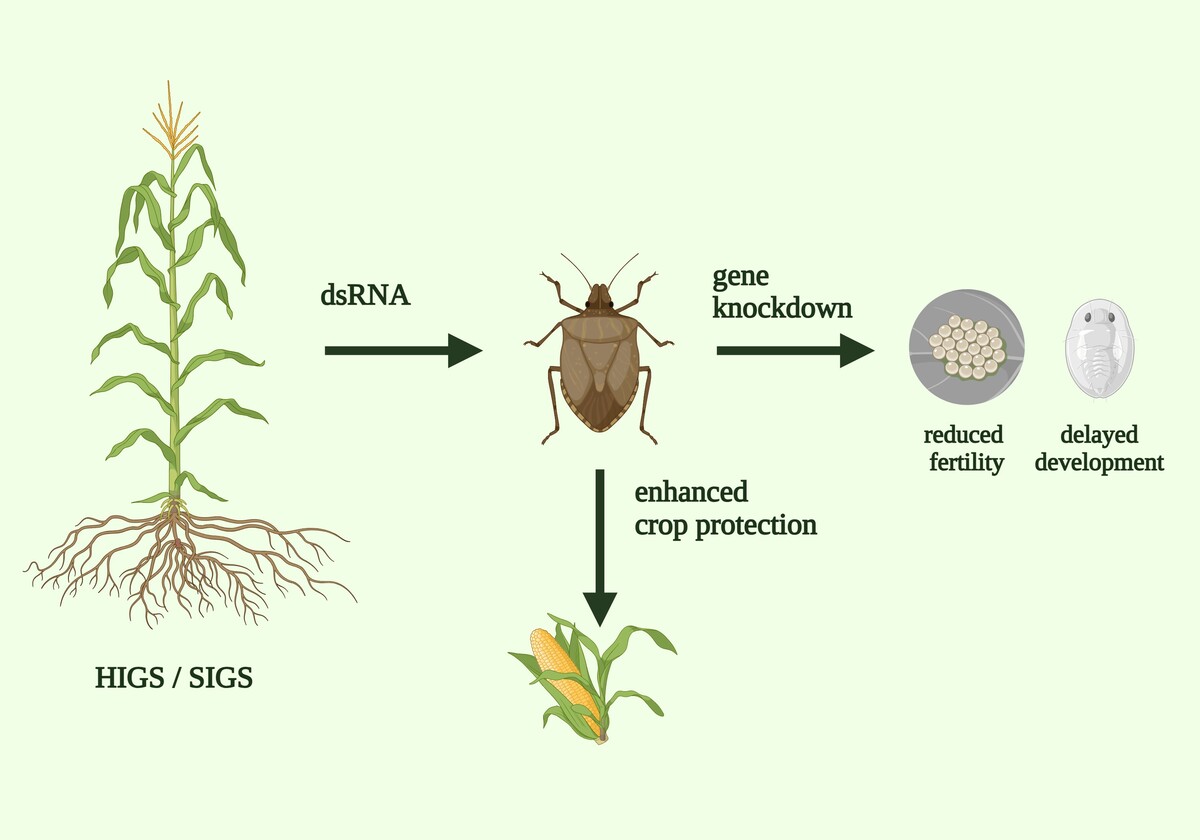
RNA interference (RNAi) represents a species-specific and environmentally sustainable strategy for the control of hemipteran pests, including aphids, whiteflies, psyllids, and stinkbugs. This review integrates current knowledge on the molecular mechanisms of RNAi in insects and its translational applications in crop protection, with particular focus on host-induced gene silencing (HIGS, transgenic expression of dsRNA in planta) and spray-induced gene silencing (SIGS). The biological effects of gene knockdown – such as reduced survival, impaired development, and disrupted feeding – are discussed alongside physiological, genetic, and epigenetic factors limiting RNAi efficacy in Hemiptera. Key challenges include dsRNA degradation in the digestive tract, inefficient cellular uptake, and limited systemic spread. Recent innovations – including nanocarrier-based delivery, biodegradable formulations, and transplastomic expression – are critically evaluated. Similarly, advances in target gene identification using transcriptomic and proteomic approaches, as well as risk assessment tools for minimizing non-target effects, support the rational design of RNAi-based biopesticides. As RNAi technologies advance, their incorporation into integrated pest management strategies may facilitate species-specific, residue-free control of hemipteran pests while supporting the conservation of agroecosystem biodiversity.
References
Abbà S., Galetto L., Ripamonti M., Rossi M., Marzachì C. 2019. RNA interference of muscle actin and ATP synthase beta increases mortality of the phytoplasma vector Euscelidius variegatus. Pest Management Science 75 (5): 1425–1434. DOI: https://doi.org/10.1002/ps.5263 DOI: https://doi.org/10.1002/ps.5263
Agrawal N., Dasaradhi P.V.N., Mohmmed A., Malhotra P., Bhatnagar R.K., Mukherjee S.K. 2003. RNA interference: biology, mechanism, and applications. Microbiology and Molecular Biology Reviews 67 (4): 657–685. DOI: https://doi.org/10.1128/MMBR.67.4.657-685.2003 DOI: https://doi.org/10.1128/MMBR.67.4.657-685.2003
Bachman P., Fischer J., Song Z., Urbanczyk-Wochniak E., Watson G. 2020. Environmental fate and dissipation of applied dsRNA in soil, aquatic systems, and plants. Frontiers in Plant Science 11: 21. DOI: https://doi.org/10.3389/fpls.2020.00021 DOI: https://doi.org/10.3389/fpls.2020.00021
Baum J.A., Bogaert T., Clinton W., Heck G.R., Feldmann P., Ilagan O., Johnson S., Plaetinck G., Munyikwa T., Pleau M., Vaughn T., Roberts J. 2007. Control of coleopteran insect pests through RNA interference. Nature Biotechnology 25 (11): 1322–1326. DOI: https://doi.org/10.1038/nbt1359 DOI: https://doi.org/10.1038/nbt1359
Biedenkopf D., Will T., Knauer T., Jelonek L., Furch A.C.U., Busche T., Koch A. 2020. Systemic spreading of exogenous applied RNA biopesticides in the crop plant Hordeum vulgare. ExRNA 2 (1): 12. DOI: https://doi.org/10.1186/s41544-020-00052-3 DOI: https://doi.org/10.1186/s41544-020-00052-3
Blackman R.L., Eastop V.F. 2000. Aphids On The World’s Crops: An Identification And Information Guide. 2nd ed. Wiley, Hoboken, 476 pp.
Castellanos N.L., Smagghe G., Sharma R., Oliveira E.E., Christiaens O. 2019. Liposome encapsulation and EDTA formulation of dsRNA targeting essential genes increase oral RNAi-caused mortality in the Neotropical stink bug Euschistus heros. Pest Management Science 75: 537–548. DOI: https://doi.org/10.1002/ps.5167 DOI: https://doi.org/10.1002/ps.5167
Chen Y., Shi Y., Wang Z., An X., Wei S., Andronis C., Vontas J., Wang J.J., Niu J. 2025. dsRNAEngineer: a web-based tool of comprehensive dsRNA design for pest control. Trends in Biotechnology 43 (4): 969–983. DOI: https://doi.org/10.1016/j.tibtech.2025.01.002 DOI: https://doi.org/10.1016/j.tibtech.2025.01.002
Christiaens O., Smagghe G. 2014. The challenge of RNAi-mediated control of hemipterans. Current Opinion in Insect Science 6: 15–21. DOI: https://doi.org/10.1016/j.cois.2014.09.012 DOI: https://doi.org/10.1016/j.cois.2014.09.012
Dalakouras A., Koidou V., Papadopoulou K. 2024. DsRNA-based pesticides: Considerations for efficiency and risk assessment. Chemosphere 352: 141530. DOI: https://doi.org/10.1016/j.chemosphere.2024.141530 DOI: https://doi.org/10.1016/j.chemosphere.2024.141530
Dalakouras A., Wassenegger M., Dadami E., Ganopoulos I., Pappas M. L., Papadopoulou K. 2020. Genetically modified organism-free RNA interference: exogenous application of RNA molecules in plants. Plant Physiology 182 (1): 38–50. DOI: https://doi.org/10.1104/pp.19.00570 DOI: https://doi.org/10.1104/pp.19.00570
Dong Y., Wu M., Zhang Q., Fu J., Loiacono F.V., Yang Y., Wang Z., Li S., Chang L., Bock R., Zhang J. 2022. Control of a sap-sucking insect pest by plastid-mediated RNA interference. Molecular Plant 15 (7): 1176–1191. DOI: https://doi.org/10.1016/j.molp.2022.05.008 DOI: https://doi.org/10.1016/j.molp.2022.05.008
Dubelman S., Fischer J., Zapata F., Huizinga K., Jiang C., Uffman,J., Levine S., Carson D. 2014. Environmental fate of double-stranded RNA in agricultural soils. PLoS ONE 9 (3): e93155. DOI: https://doi.org/10.1371/journal.pone.0093155 DOI: https://doi.org/10.1371/journal.pone.0093155
EFSA (European Food Safety Authority), Barro F., Braeuning A., Goumperis T., Lewandowska A., Moxon S., Papadopoulou N., Sánchez‐Brunete E. 2025. Risk assessment considerations for RNAi‐based genetically modified plants. EFSA Journal 23 (3): e9321. DOI: https://doi.org/10.2903/j.efsa.2025.9321 DOI: https://doi.org/10.2903/j.efsa.2025.9321
EFSA GMO Panel (EFSA Panel on Genetically Modified Organisms), Naegeli H., Bresson J.L., Dalmay T., Dewhurst I.C., Epstein M.M., Guerche P., Hejatko J., Moreno F.J., Mullins E., Nogué F., Rostoks N., Sánchez Serrano J.J., Savoini G., Veromann E., Veronesi F., Bonsall M.B., Mumford J., Wimmer E.A., Devos Y., Paraskevopoulos K. and Firbank L.G. 2020. Scientific Opinion on the adequacy and sufficiency evaluation of existing EFSA guidelines for the molecular characterisation, environmental risk assessment and post-market environmental monitoring of genetically modified insects containing engineered gene drives. EFSA Journal 202018 (11): 6297. DOI: https://doi.org/10.2903/j.efsa.2020.6297 DOI: https://doi.org/10.2903/j.efsa.2020.6297
Elbana N.M., Saad-Allah K.M. 2024. Implementing RNA Interference to Boost Plant Resistance and Enhance Crop Characteristics: A Review. Plant Molecular Biology Reporter. DOI: https://doi.org/10.1007/s11105-024-01513-x DOI: https://doi.org/10.1007/s11105-024-01513-x
Feinberg E.H., Hunter C.P. 2003. Transport of dsRNA into cells by the transmembrane protein SID-1. Science 301 (5639): 1545–1547. DOI: https://doi.org/10.1126/science.1087117 DOI: https://doi.org/10.1126/science.1087117
Finetti L., Benetti L., Leyria J., Civolani S., Bernacchia G. 2023. Topical delivery of dsRNA in two hemipteran species: Evaluation of RNAi specificity and non-target effects. Pesticide Biochemistry and Physiology 189: 105295. DOI: https://doi.org/10.1016/j.pestbp.2022.105295 DOI: https://doi.org/10.1016/j.pestbp.2022.105295
Fire A., Xu S., Montgomery M.K., Kostas S.A., Driver S.E., Mello C.C. 1998. Potent and specific genetic interference by double-stranded RNA in Caenorhabditis elegans. Nature 391 (6669): 806–811. DOI: https://doi.org/10.1038/35888 DOI: https://doi.org/10.1038/35888
Fischer J.R., Zapata F., Dubelman S., Mueller G.M., Uffman J.P., Jiang C., Jensen P.D., Levine S.L. 2017. Aquatic fate of a double-stranded RNA in a sediment-water system following an over-water application. Environmental Toxicology and Chemistry 36 (3): 727–734. DOI: https://doi.org/10.1002/etc.3585 DOI: https://doi.org/10.1002/etc.3585
Galdeano D.M., Granato L.M., de Souza Pacheco I., Machado M.A. 2018. RNAi tools applied to hemipteran insects that are vectors of plant pathogens. Revisão Anual de Patologia de Plantas 26: 51–68.
Germing K., Navarrete C.A.D., Schiermeyer A., Hommen U., Zühl L., Eilebrecht S., Eilebrecht E. 2025. Crop protection by RNA interference: A review of recent approaches, current state of developments and use as of 2013. Environmental Sciences Europe 37 (1): 15. DOI: https://doi.org/10.1186/s12302-025-01052-6 DOI: https://doi.org/10.1186/s12302-025-01052-6
Ghosh S.K.B., Hunter W.B., Park A.L., Gundersen-Rindal D.E. 2018. Double-stranded RNA oral delivery methods to induce RNA interference in phloem and plant-sap-feeding Hemipteran insects. Journal of Visualized Experiments 135: 57390. DOI: https://doi.org/10.3791/57390 DOI: https://doi.org/10.3791/57390-v
Glastad K.M., Hunt B.G., Goodisman M.A.D. 2019. Epigenetics in Insects: genome regulation and the generation of phenotypic diversity. Annual Review of Entomology 64 (1): 185–203. DOI: https://doi.org/10.1146/annurev-ento-011118-111914 DOI: https://doi.org/10.1146/annurev-ento-011118-111914
Gu L., Knipple D.C. 2013. Recent advances in RNA interference research in insects: Implications for future insect pest management strategies. Crop Protection 45: 36–40. DOI: https://doi.org/10.1016/j.cropro.2012.10.004 DOI: https://doi.org/10.1016/j.cropro.2012.10.004
Hunter W.B., Wintermantel W.M. 2021. Optimizing efficient RNAi-mediated control of hemipteran pests (Psyllids, Leafhoppers, Whitefly): modified pyrimidines in dsRNA triggers. Plants 10 (9): 1782. DOI: https://doi.org/10.3390/plants10091782 DOI: https://doi.org/10.3390/plants10091782
Jain R.G., Fletcher S.J., Manzie N., Robinson K.E., Li P., Lu E., Brosnan C.A., Xu Z.P., Mitter N. 2022. Foliar application of clay-delivered RNA interference for whitefly control. Nature Plants 8 (5): 535–548. DOI: https://doi.org/10.1038/s41477-022-01152-8 DOI: https://doi.org/10.1038/s41477-022-01152-8
Jain R.G., Robinson K.E., Asgari S., Mitter N. 2020a. Current scenario of RNAi‐based hemipteran control. Pest Management Science 77 (5): 2188–2196. DOI: https://doi.org/10.1002/ps.6153 DOI: https://doi.org/10.1002/ps.6153
Jain R.G., Robinson K.E., Fletcher S.J., Mitter N. 2020b. RNAi-based functional genomics in Hemiptera. Insects 11 (9): 557. DOI: https://doi.org/10.3390/insects11090557 DOI: https://doi.org/10.3390/insects11090557
Kaplanoglu E., Kolotilin I., Menassa R., Donly C. 2022. Plastid transformation of micro-tom tomato with a hemipteran double-stranded RNA results in RNA interference in multiple insect species. International Journal of Molecular Sciences 23 (7): 3918. DOI: https://doi.org/10.3390/ijms23073918 DOI: https://doi.org/10.3390/ijms23073918
Khajuria C., Ivashuta S., Wiggins E., Flagel L., Moar W., Pleau M., Miller K., Zhang Y., Ramaseshadri P., Jiang C., Hodge T., Jensen P., Chen M., Gowda A., McNulty B., Vazquez C., Bolognesi R., Haas J., Head G., Clark T. 2018. Development and characterization of the first dsRNA-resistant insect population from western corn rootworm, Diabrotica virgifera virgifera LeConte. PloS one 13 (5): e0197059. DOI: https://doi.org/10.1371/journal.pone.0197059 DOI: https://doi.org/10.1371/journal.pone.0197059
Kulkarni M.M., Booker M., Silver S.J., Friedman A., Hong P., Perrimon N., Mathey-Prevot B. 2006. Evidence of off-target effects associated with long dsRNAs in Drosophila melanogaster cell-based assays. Nature Methods 3 (10): 833–838. DOI: https://doi.org/10.1038/nmeth935 DOI: https://doi.org/10.1038/nmeth935
Lewis S.H., Ross L., Bain S.A., Pahita E., Smith, S.A., Cordaux R., Miska E.A., Lenhard B., Jiggins F.M., Sarkies P. 2020. Widespread conservation and lineage-specific diversification of genome-wide DNA methylation patterns across arthropods. PLOS Genetics 16 (6): e1008864. DOI: https://doi.org/10.1371/journal.pgen.1008864 DOI: https://doi.org/10.1371/journal.pgen.1008864
Li H., Mo J., Wang X., Pan B., Xu S., Li S., Zheng X., Lu W. 2023. IPS (In-Plant System) Delivery of Double-Stranded Vitellogenin and Vitellogenin receptor via Hydroponics for Pest Control in Diaphorina citri Kuwayama (Hemiptera: Psyllidae). International Journal of Molecular Sciences 24 (11): 9497. DOI: https://doi.org/10.3390/ijms24119497 DOI: https://doi.org/10.3390/ijms24119497
Li J., Wang X., Wang M., Ma W., Hua H. 2013. Advances in the use of the RNA interference technique in Hemiptera. Insect Science 20 (1): 31–39. DOI: https://doi.org/10.1111/j.1744-7917.2012.01550.x DOI: https://doi.org/10.1111/j.1744-7917.2012.01550.x
Ma Z., Zhang Y., Li M., Chao Z., Du X., Yan S., Shen J. 2023. A first greenhouse application of bacteria-expressed and nanocarrier-delivered RNA pesticide for Myzus persicae control. Journal of Pest Science 96: 181–193. DOI: https://doi.org/10.1007/s10340-022-01485-5 DOI: https://doi.org/10.1007/s10340-022-01485-5
Marques J.T., Kim K., Wu P.H., Alleyne T.M., Jafari N., Carthew R.W. 2010. Loqs and R2D2 act sequentially in the siRNA pathway in Drosophila. Nature Structural and Molecular Biology 17 (1): 24–30. DOI: https://doi.org/10.1038/nsmb.1735 DOI: https://doi.org/10.1038/nsmb.1735
Mezzetti B., Smagghe G., Arpaia S., Christiaens O., Dietz-Pfeilstetter A., Jones H., Kostov K., Sabbadini S., Opsahl-Sorteberg H.-G., Ventura V., Taning C.N.T., Sweet J. 2020. RNAi: What is its position in agriculture? Journal of Pest Science 93 (4): 1125–1130. DOI: https://doi.org/10.1007/s10340-020-01238-2 DOI: https://doi.org/10.1007/s10340-020-01238-2
Miles P.W. 1999. Aphid saliva. Biological Reviews of the Cambridge Philosophical Society 74 (1): 41–85. DOI: https://doi.org/10.1017/S0006323198005271 DOI: https://doi.org/10.1017/S0006323198005271
Miller D., Rung A., Parikh G. 2014. Scale Insects, edition 2, a tool for the identification of potential pest scales at U.S.A. ports-of-entry (Hemiptera, Sternorrhyncha, Coccoidea). ZooKeys 431: 61–78. DOI: https://doi.org/10.3897/zookeys.431.7474 DOI: https://doi.org/10.3897/zookeys.431.7474
Mishra S., Dee J., Moar W., Dufner-Beattie J., Baum J., Dias N. P., Alyokhin A., Buzza A., Rondon S.I., Clough M., Menasha S., Groves R., Clements J., Ostlie K., Felton G., Waters T., Snyder W.E., Jurat-Fuentes J.L. 2021. Selection for high levels of resistance to double-stranded RNA (dsRNA) in Colorado potato beetle (Leptinotarsa decemlineata Say) using non-transgenic foliar delivery. Scientific Reports 11 (1): 6523. DOI: https://doi.org/10.1038/s41598-021-85876-1 DOI: https://doi.org/10.1038/s41598-021-85876-1
Mondal M., Mansfield K., Flynt A. 2018. siRNAs and piRNAs collaborate for transposon control in the two-spotted spider mite. RNA 24 (7): 899–907. DOI: https://doi.org/10.1261/rna.065839.118 DOI: https://doi.org/10.1261/rna.065839.118
Mutti N.S., Park Y., Reese J.C., Reeck G.R. 2006. RNAi knockdown of a salivary transcript leading to lethality in the pea aphid, Acyrthosiphon pisum. Journal of insect science 6: 1–7. DOI: https://doi.org/10.1673/031.006.3801 DOI: https://doi.org/10.1673/031.006.3801
Nault L.R. 1997. Arthropod transmission of plant viruses: a new synthesis. Annals of the Entomological Society of America 90 (5): 521–541. DOI: https://doi.org/10.1093/aesa/90.5.521 DOI: https://doi.org/10.1093/aesa/90.5.521
Niu J., Chen R., Wang J. 2024. RNA interference in insects: the link between antiviral defense and pest control. Insect Science 31 (1): 2–12. DOI: https://doi.org/10.1111/1744-7917.13208 DOI: https://doi.org/10.1111/1744-7917.13208
Nunes F.M.F., Aleixo A.C., Barchuk A.R., Bomtorin A.D., Grozinger C.M., Simões Z.L.P. 2013. Non-Target Effects of Green Fluorescent Protein (GFP)-Derived Double-Stranded RNA (dsRNA-GFP) Used in Honey Bee RNA Interference (RNAi) Assays. Insects 4 (1): 90–103. DOI: https://doi.org/10.3390/insects4010090 DOI: https://doi.org/10.3390/insects4010090
Pacheco I.D., Walling L.L., Atkinson P.W. 2022. Gene editing and genetic control of hemipteran pests: progress, challenges and perspectives. Frontiers in Bioengineering and Biotechnology 10: 900785. DOI: https://doi.org/10.3389/fbioe.2022.900785 DOI: https://doi.org/10.3389/fbioe.2022.900785
Pan H., Xu L., Noland J.E., Li H., Siegfried B.D., Zhou X. 2016. Assessment of potential risks of dietary RNAi to a soil micro-arthropod, Sinella curviseta Brook (Collembola: Entomobryidae). Frontiers in Plant Science 7: 1028. DOI: https://doi.org/10.3389/fpls.2016.01028 DOI: https://doi.org/10.3389/fpls.2016.01028
Parker K.M., Barragán Borrero V., Van Leeuwen D.M., Lever M.A., Mateescu B., Sander M. 2019. Environmental fate of RNA interference pesticides: adsorption and degradation of double-stranded RNA molecules in agricultural soils. Environmental Science & Technology 53 (6): 3027–3036. DOI: https://doi.org/10.1021/acs.est.8b05576 DOI: https://doi.org/10.1021/acs.est.8b05576
Perdikis D., Fantinou A., Lykouressis D. 2011. Enhancing pest control in annual crops by conservation of predatory Heteroptera. Biological Control 59 (1): 13–21. DOI: https://doi.org/10.1016/j.biocontrol.2011.03.014 DOI: https://doi.org/10.1016/j.biocontrol.2011.03.014
Posnien N., Schinko J., Grossmann D., Shippy T.D., Konopova B., Bucher G. 2009. RNAi in the red flour beetle (Tribolium). Cold Spring Harbor Protocols 2009(8): pdb.prot5256. DOI: https://doi.org/10.1101/pdb.prot5256 DOI: https://doi.org/10.1101/pdb.prot5256
Qi H.Y., Zhang D.D., Liu B., Chen J.Y., Han D., Wang D. 2024. Leveraging RNA interference technology for selective and sustainable crop protection. Frontiers in Plant Science 15: 1502015. DOI: https://doi.org/10.3389/fpls.2024.1502015 DOI: https://doi.org/10.3389/fpls.2024.1502015
Rangasamy M., Siegfried B.D. 2012. Validation of RNA interference in western corn rootworm Diabrotica virgifera virgifera LeConte (Coleoptera: Chrysomelidae) adults. Pest Management Science 68 (4): 587–591. DOI: https://doi.org/10.1002/ps.2301 DOI: https://doi.org/10.1002/ps.2301
Ripamonti M., Cerone L., Abbà S., Rossi M., Ottati S., Palmano S., Marzachì C., Galetto L. 2022. Silencing of ATP Synthase β Impairs Egg Development in the Leafhopper Scaphoideus titanus, Vector of the Phytoplasma Associated with Grapevine Flavescence Dorée. International Journal of Molecular Sciences 23 (2): 765. DOI: https://doi.org/10.3390/ijms23020765 DOI: https://doi.org/10.3390/ijms23020765
Rossi M., Ottati S., Bucci L., Fusco A., Abbà S., Bosco D., Marzachì C., Galetto L. 2024. Lab-scale method for plant-mediated delivery of dsRNAs to phloem-feeding leafhoppers. Journal of Pest Science 97: 455–467. DOI: https://doi.org/10.1007/s10340-023-01670-0 DOI: https://doi.org/10.1007/s10340-023-01670-0
Saleh M.C., van Rij R.P., Hekele A., Gillis A., Foley E., O'Farrell P.H., Andino R. 2006. The endocytic pathway mediates cell entry of dsRNA to induce RNAi silencing. Nature Cell Biology 8 (8): 793–802. DOI: https://doi.org/10.1038/ncb1439 DOI: https://doi.org/10.1038/ncb1439
Schaefer C.W., Panizzi A.R. (eds.). 2000. Heteroptera of economic importance. CRC Press, Boca Raton, 828 pp. DOI: https://doi.org/10.1201/9781420041859 DOI: https://doi.org/10.1201/9781420041859
Sharma R., Christiaens O., Taning C.N., Smagghe G. 2021. RNAi-mediated mortality in southern green stinkbug Nezara viridula by oral delivery of dsRNA. Pest Management Science 77 (1): 77–84. DOI: https://doi.org/10.1002/ps.6017 DOI: https://doi.org/10.1002/ps.6017
Svoboda P. 2020. Key mechanistic principles and considerations concerning RNA interference. Frontiers in Plant Science 11: 1237. DOI: https://doi.org/10.3389/fpls.2020.01237 DOI: https://doi.org/10.3389/fpls.2020.01237
Tan J., Levine S.L., Bachman P.M., Jensen P.D., Mueller G.M., Uffman J.P., Meng C., Song Z., Richards K.B., Beevers M.H. 2016. No impact of DvSnf7 RNA on honey bee (Apis mellifera L.) adults and larvae in dietary feeding tests. Environmental Toxicology and Chemistry 35 (2): 287–294. DOI: https://doi.org/10.1002/etc.3075 DOI: https://doi.org/10.1002/etc.3075
Taning C.N.T., Christiaens O., Li X., Swevers L., Casteels H., Maes M., Smagghe G. 2018. Engineered flock house virus for targeted gene suppression through RNAi in fruit flies (Drosophila melanogaster) in vitro and in vivo. Frontiers in Physiology 9: 805. DOI: https://doi.org/10.3389/fphys.2018.00805 DOI: https://doi.org/10.3389/fphys.2018.00805
Vélez Arango A.M., Darlington M., Jurat-Fuentes J.L., Kogel K.H., Rathore K., Smagghe G., Whyard S. 2024. RNA interference in agriculture: methods, applications, and governance. Council for Agricultural Science and Technology 72: 1–21. DOI: https://doi.org/10.62300/IRNE9191 DOI: https://doi.org/10.62300/IRNE9191
Volpe G., Mazzucchiello S. M., Rosati N., Lucibelli F., Varone M., Baccaro D., Mattei I., Di Lelio I., Becchimanzi A., Giordano E., Salvemini M., Aceto S., Pennacchio F., Saccone G. 2024. Simultaneous silencing of gut nucleases and a vital target gene by adult dsRNA feeding enhances RNAi efficiency and mortality in Ceratitis capitata. Insects 15 (9): 717. DOI: https://doi.org/10.3390/insects15090717 DOI: https://doi.org/10.3390/insects15090717
Yan S., Qian J., Cai C., Ma Z., Li J., Yin M., Ren B., Shen J. 2020. Spray method application of transdermal dsRNA delivery system for efficient gene silencing and pest control on soybean aphid Aphis glycines. Journal of Pest Science 93: 449–459. DOI: https://doi.org/10.1007/s10340-019-01157-x DOI: https://doi.org/10.1007/s10340-019-01157-x
Yang L., Qin C.Y., Chen Y., Wang Z.G., Chen R.Y., Niu J., Wang, J.J. 2023. Fusion dsRNA in targeting salivary protein genes enhance the RNAi-based aphid control. Pesticide Biochemistry and Physiology 197: 105645. DOI: https://doi.org/10.1016/j.pestbp.2023.105645 DOI: https://doi.org/10.1016/j.pestbp.2023.105645
Yang M., Wei Y., Jiang F., Wang Y., Guo X., He J., Kang L. 2014. MicroRNA-133 inhibits behavioral aggregation by controlling dopamine synthesis in locusts. PLoS Genetics 10 (2): e1004206. DOI: https://doi.org/10.1371/journal.pgen.1004206 DOI: https://doi.org/10.1371/journal.pgen.1004206
Ylla G., Fromm B., Piulachs M.D., Belles X. 2016. The microRNA toolkit of insects. Scientific Reports 6 (1): 37736. DOI: https://doi.org/10.1038/srep37736 DOI: https://doi.org/10.1038/srep37736
Younis A., Siddique M.I., Kim C.K., Lim K.B. 2014. RNA Interference (RNAi) Induced Gene Silencing: A Promising Approach of Hi-Tech Plant Breeding. International Journal of Biological Science 10 (10): 1150–1180. DOI: https://doi.org/10.7150/ijbs.10452 DOI: https://doi.org/10.7150/ijbs.10452
Zielińska A., Lis J.A. 2025. Modelowanie niszy ekologicznej obcych i inwazyjnych gatunków pluskwiaków różnoskrzydłych (Hemiptera: Heteroptera) – dane dla Europy, ze szczególnym uwzględnieniem Polski. Monographs of the Upper Silesian Museum 27: 1–140. (in print)
Zha W., Peng X., Chen R., Du B., Zhu L., He G. 2011. Knockdown of midgut genes by dsRNA-transgenic plant-mediated RNA interference in the hemipteran insect Nilaparvata lugens. PloS one 6 (5): e20504. DOI: https://doi.org/10.1371/journal.pone.0020504 DOI: https://doi.org/10.1371/journal.pone.0020504
Zhao J.H., Liu Q.Y., Xie Z.M., Guo H.S. 2024. Exploring the challenges of RNAi-based strategies for crop protection. Advanced Biotechnology 2 (3): 23. DOI: https://doi.org/10.1007/s44307-024-00031-x DOI: https://doi.org/10.1007/s44307-024-00031-x
Zhu K.Y., Palli S.R. 2020. Mechanisms, applications, and challenges of insect RNA interference. Annual Review of Entomology 65 (1): 293–311. DOI: https://doi.org/10.1146/annurev-ento-011019-025224 DOI: https://doi.org/10.1146/annurev-ento-011019-025224
Zotti M., Dos Santos E.A., Cagliari D., Christiaens O., Taning C.N.T., Smagghe G. 2018. RNA interference technology in crop protection against arthropod pests, pathogens and nematodes. Pest Management Science 74 (6): 1239–1250. DOI: https://doi.org/10.1002/ps.4813 DOI: https://doi.org/10.1002/ps.4813
Downloads
Published
How to Cite
Issue
Section
License
Copyright (c) 2026 Journal of Plant Protection Research

This work is licensed under a Creative Commons Attribution 4.0 International License.